7 steps to fix sample return logistics for UK studios (hybrid)
By Faura ·
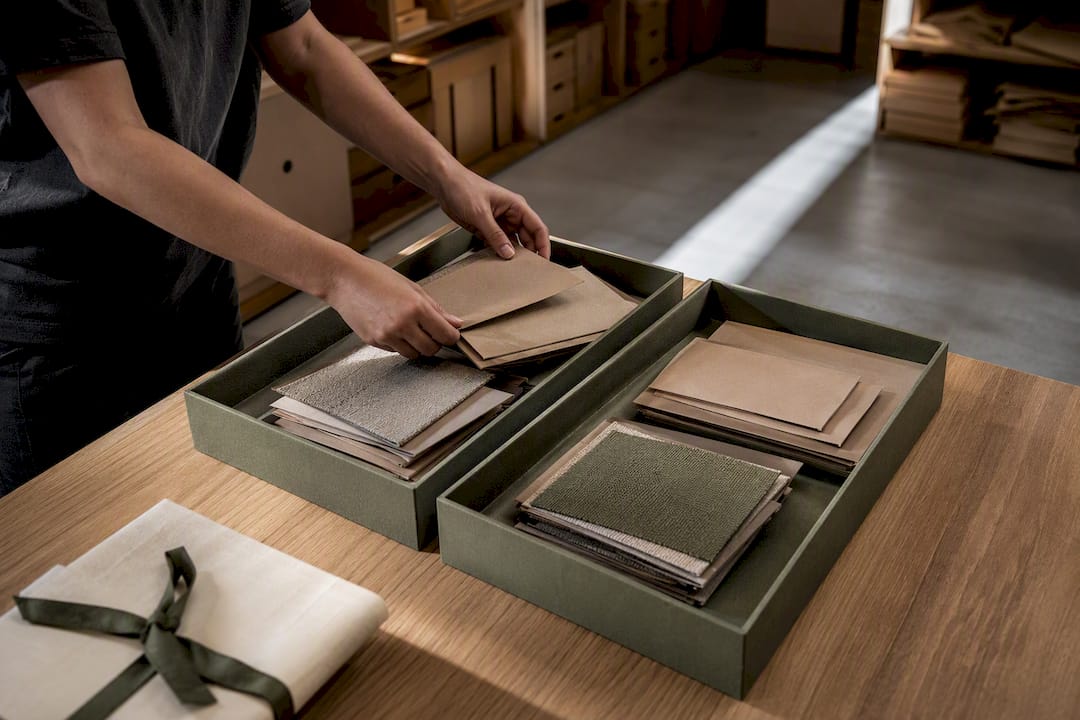
Adopt a standard intake, catalogue, loan and centralised return workflow, and most sample losses simply stop happening. That single change fixes the two costliest problems in any studio: samples that vanish before a project closes, and staff hours lost chasing suppliers for return confirmations. A similar hybrid approach is described by the Materials Council for hybrid physical-digital libraries.
TL;DR:
- Implementing a centralized workflow with clear ownership at each step reduces sample loss and streamlines the return process, preventing costly errors.
- Proper triage and inspection upon arrival prioritize urgent samples and prevent misfiling, ensuring vital project deadlines are met.
- Maintaining a detailed, digital, and searchable catalogue with key information allows quick retrieval and reduces time wasted searching for samples.
- Centralized, pooled return collection minimizes administrative effort and travel costs, especially when combined with negotiated return windows and clear packing procedures.
- Using shared materials libraries or trade showrooms such as Faura’s can reduce in-house storage needs while maintaining access to materials.
Table of Contents
- Building a sample return logistics workflow that actually holds
- How should you triage samples as they arrive?
- What should your digital sample catalogue actually record?
- How do you run a loan system that gets samples back?
- Should you centralise your sample returns process?
- What does good sample storage look like day to day?
- What should a sample return policy cost you in time and money?
- Which tools actually solve this for a small studio?
- Why residency-based sample handling changes the maths
- Faura as your alternative to an in-house sample library
- Sources
Building a sample return logistics workflow that actually holds
A working system needs seven steps, each with a named owner, or it collapses the moment the studio gets busy. Skipping the audit stage is the single most common failure point, because that is where “missing” samples actually get found.
- Receive — log the delivery against the original order the day it arrives.
- Inspect — check condition, finish and quantity against the supplier’s paperwork.
- Label — assign a shelf address and a unique reference number.
- Catalogue — enter the item into the digital record with photos.
- Circulate — issue on loan with a due date and borrower details.
- Return — process, repack and dispatch back to the supplier.
- Audit — reconcile physical stock against the digital catalogue monthly.
Stash bins matter more than most studios realise. A single “incoming” tray keeps unprocessed deliveries away from the working shelves, and a “returns waiting” tray does the same for outgoing items, so nothing gets mixed into live project stock by mistake. Junior staff or a studio coordinator typically own steps one to four; the project lead owns circulation and return decisions.
Pro Tip: Batch your intake and returns processing into one or two fixed sessions a week rather than handling each item as it lands. It takes roughly the same total time, but it stops fifteen small interruptions from breaking a designer’s focus every day.
How should you triage samples as they arrive?
Not every delivery deserves the same urgency. A finish sample needed for tomorrow’s client presentation jumps the queue; a speculative swatch for a pitch three months out does not. Good triage starts with physically separating what has arrived from what is waiting to go back out, which prevents new stock from being confused with returns-in-waiting.
Every incoming sample should pass through a short inspection before it reaches a shelf:
- Lighting conditions noted at inspection, since colour and finish can read differently under studio light versus daylight
- Product identifier and supplier reference matched against the delivery note
- Date received and the name of the reviewer who checked it
- Temporary status flagged (in triage, ready to catalogue, or urgent hold for a client meeting)
That last field is what stops an urgent presentation sample sitting in the general queue behind a week’s worth of routine deliveries.
What should your digital sample catalogue actually record?
A shelf full of beautifully organised swatches is worthless if nobody can find a specific one without walking the room. The fix is a searchable digital record mapped directly to physical shelf addresses, which helps prevent samples being marked “lost” when they are simply misfiled.
At minimum, each record needs:
- Supplier name and SKU or product reference
- Sample size or format (swatch, cutting, finish board, full tile)
- Shelf or bin address, ideally a simple alphanumeric code such as A3-05
- Current loan status and borrower, if out on loan
- A photograph, and sustainability or embodied-carbon data where the supplier provides it
A hybrid model wins over either extreme. Keep your highest-use materials physically close to the desk, catalogue everything digitally, and staff working remotely or across sites can still search the collection without a phone call to the studio.
For the software layer, three categories exist. Purpose-built materials-library platforms support sustainability filtering and photo fields out of the box. General inventory or CRM tools can be adapted but need manual field setup. Spreadsheets work for very small libraries but break down fast once loan tracking and shelf mapping both need updating in real time.
How do you run a loan system that gets samples back?
A sample with no due date is a sample you will never see again. Standard practice is a loan period of one to four weeks depending on the item and the relationship, with the return date printed clearly on the packing slip rather than buried in an email thread.
- Record the borrower’s name and the project reference at the point of issue.
- Set an expected return date and print it on the slip, not just in the database.
- Note the condition of the item when it leaves, so damage disputes are quick to resolve.
- Send a reminder at the halfway point of the loan window, then again three days before it’s due.
- Flag repeat late returners for a shorter loan window next time.
A light incentive, such as priority access to new arrivals for teams with a clean return record, does more to change behaviour than a penalty clause buried in the terms.
Should you centralise your sample returns process?
Sending items back to forty different suppliers one parcel at a time is the single biggest drain on studio time in this entire workflow. Centralised or pooled return collection, where multiple items go back through one courier pickup or one consolidated hub, cuts that administrative load significantly, and the British Institute of Interior Design has published a feature on circular, pooled sampling services.
Preparing a batch for return still needs discipline:
- Sort by supplier and destination before packing, not after
- Repack fragile items (stone, glass, veneer) in their original protective packaging where possible
- Generate a manifest listing every item, reference number and condition note
- Label each parcel clearly with the return authorisation number the supplier issued
Return windows are worth negotiating rather than accepting as fixed. Get the agreed window and any late-return penalty in writing, because reporting on centralised fulfilment models shows convenience for designers often shifts real cost onto the supplier’s side, and that tension surfaces fastest around return terms.
What does good sample storage look like day to day?
Storage decisions either save your team minutes every day or cost them minutes every day. There’s no neutral option. The materials library at Payette demonstrates the principle well: collocating similar materials and keeping supplier literature filed alongside the physical sample cuts duplicate ordering and speeds specification.
A few rules cover most of it:
- Put your most-requested materials at arm’s reach, not on a top shelf behind the ladder
- Use one consistent labelling format across every shelf, bin and project tray
- Schedule re-filing as a fixed weekly task rather than “whenever someone gets to it”
- Store light-sensitive fabrics and finishes away from direct sun, and keep stone and glass samples on padded shelving
Hierarchical categorisation by material type, then by project, is what most established studios settle on for exactly this reason, according to organisational guidance from practising design studios.
What should a sample return policy cost you in time and money?
Most studios settle on a standard loan and return window range, which may be tightened for high-demand items and extended for long-running projects with a trusted supplier. Set the window by relationship, not by habit.
The real cost is staff time, not postage. Processing one sample individually, from unboxing through cataloguing, typically takes several minutes; batching ten at once in a single weekly session cuts that per-item time noticeably because the setup cost only happens once.
- Batch processing sessions, not one-off handling, protect design staff from constant interruption
- Fewer, larger consolidated shipments reduce packaging waste and courier trips compared with frequent single-item returns
- A sustainable approach to packaging on the return side reduces the material waste that comes with repeated individual shipments
Which tools actually solve this for a small studio?
You have three broad options, and most studios end up combining two of them rather than picking one outright.
- Purpose-built materials-library software for cataloguing, sustainability filtering and loan tracking, better suited to volume than a spreadsheet
- General inventory or CRM platforms, workable but requiring manual setup for shelf-address fields and loan status
- Courier consolidation or pooled pickup services, which handle the physical return leg without you booking separate collections per supplier
- A showroom, residency or central sample hub, which removes the storage and cataloguing burden from your own premises entirely
Why residency-based sample handling changes the maths
Faura’s showroom can reduce the storage and chasing problem: designers can view samples and technical files from a library of over 200 brands with procurement, logistics and delivery handled by one team. For a studio without a spare room for shelving, that is the practical alternative to running the seven-step process solo.
Faura as your alternative to an in-house sample library
Running the full intake to return cycle in-house works, but it demands space, a rota and real staff hours every week. Faura offers an alternative: a trade-only showroom in Westminster with samples, technical files and a materials library, and procurement, logistics and delivery handled by one team, so you can spend more time specifying rather than chasing return parcels. Designers with a trade account can visit by appointment, request samples and use space at the residency to present schemes to clients. If your studio has outgrown its shelving or you would simply rather not manage a returns rota, book an appointment through Faura’s trade account and see whether the residency model fits your workflow better than the in-house one.