London Design Week 2026 recap: dates, districts and trade notes
By Faura ·
London’s design calendar in 2026 hinges on two windows. The London Design Festival ran from 12 to 20 September 2026, with Shoreditch Design Week concentrated inside it from 15 to 20 September. Separately, the London Design Week trade show at Design Centre Chelsea Harbour ran from 9 to 13 March 2026. Both matter for different reasons: one is a city-wide festival across 11 design districts, the other a dedicated interiors trade show with over 600 brands.
For designers planning around either date, three actions come first:
- For future editions, register for trade access or press credentials before the festival opens.
- Book showroom appointments at Design Centre Chelsea Harbour and Faura in advance, since diaries fill fast in September and March.
- Subscribe to programme updates from the festival and Material Matters, as exhibitor lists and talks schedules shift close to the date.
Pro Tip: Set calendar reminders now for both windows. September and March are London’s two busiest weeks for interiors sourcing, and appointment slots at popular showrooms go within days of being released.
TL;DR:
- Prioritize booking appointments early at Chelsea Harbour’s March show, which hosts over 600 brands, to avoid missing key launches and limited availability.
- Focus on one or two districts per day during the festival, since crossing multiple zones wastes hours in transit with minimal productivity gain.
- Shoreditch Design Week and Material Matters replace scattered showrooms with concentrated material sourcing, especially within their trade-dense hub at UNLOCKED Shoreditch.
- Register for trade or press credentials well in advance for both the festival and the March show to secure access to exclusive previews and private viewing opportunities.
- Use Faura’s curated, trade-only showroom with over 200 brands as a consolidated base for sourcing, meetings, and project support during busy festival weeks.
Table of Contents
- What’s on during London Design Festival 2026?
- Why prioritise Shoreditch Design Week and Material Matters?
- What does the March trade show at Chelsea Harbour offer?
- How do you register and get trade access?
- How should you plan your route across the festival?
- How Faura supports trade sourcing during festival weeks
- How did London Design Week become what it is today?
- Who should you watch across London Design Week 2026?
- What special installations define the 2026 programme?
- Where do you network during London Design Week?
- Where should you stay and eat during festival week?
- What sustainability themes should you expect in 2026?
- Key Takeaways
- Why practical route planning matters more than exhibitor lists
- Sources
What’s on during London Design Festival 2026?
The London Design Festival spans several days and multiple districts, each with its own character and audience. The Global Design Forum, the festival’s thought-leadership programme, returned to the V&A South Kensington from 12 to 14 September 2026, running talks and panels alongside the wider exhibition programme.
The eleven districts aren’t interchangeable. Each is built around a distinct creative cluster, which means the value of a visit depends entirely on matching the district to your project sector.
- Chelsea: interiors, showrooms and established luxury brands, anchored by Chelsea Harbour.
- Shoreditch: materials, product innovation and emerging studios, this year expanded and folded into Shoreditch Design Week.
- Mayfair: high-end design, galleries and collectible design pieces.
- Clerkenwell: a long-standing hub for furniture and lighting brands, popular with architects and specifiers.
- Brompton: design retail and boutique showrooms close to the museum quarter.
Practitioners get more out of the week by targeting the district that matches their project sector rather than trying to see every district in one pass. A residential specifier gains more from an afternoon in Chelsea than a scattergun day covering three postcodes.
Pro Tip: Pick two districts maximum per day. Travelling between distant clusters eats into appointment time far more than the walking distance suggests, especially with September crowds.
Why prioritise Shoreditch Design Week and Material Matters?
Shoreditch has become the festival’s trade-dense engine room. Shoreditch Design Week takes place in mid-September 2026, with a concentrated cluster of four curated trade exhibitions anchoring the district across the first three days, 15 to 17 September.
The standout is Material Matters London, which relocated into Shoreditch for 2026 and ran from 15 to 17 September 2026 at UNLOCKED Shoreditch, 118 Curtain Road, EC2A 3PJ. The move creates a genuinely trade-dense hub, letting designers compare material innovations side by side over three concentrated days rather than chasing individual showrooms across the city.
The nearest stations are Shoreditch High Street, Old Street and Liverpool Street, all within a short walk.
Before you go, prepare:
- A shortlist of material categories you’re actively specifying against (stone, textile, acoustic panel, sustainable timber).
- Specification questions ready for stand staff. Lead time and minimum order quantities rarely make it onto exhibitor literature.
- Procurement lead times for your live projects, so you can flag urgency on the spot.
What does the March trade show at Chelsea Harbour offer?
Design Centre Chelsea Harbour’s London Design Week trade show ran 9 to 13 March 2026, and it operates on a different scale to the September festival. Rather than a city-wide sprawl, it’s a single-site trade show: 135+ showrooms, 600 brands and 30+ house guests under one roof beside the Thames.
For a working showroom day, that scale means realistic pacing matters more than ambition. Expect:
- Extended opening hours during the show week, with many showrooms hosting launches and evening previews.
- A dedicated programme or app listing exhibitor locations, launch times and house guest appearances, worth checking the night before.
- On-site facilities geared to trade visitors, including hospitality areas and appointment booking desks within the centre.
Book showroom appointments ahead of the week rather than walking in cold. With 600 brands under one roof, an unplanned day means missing the launches that matter to your specification list.
How do you register and get trade access?
Registration differs by event, and mixing them up costs time. For the September festival, register through the official London Design Festival programme for public listings, but request trade or press credentials separately where exhibitors offer them. For the March show, book directly through the Design Centre Chelsea Harbour show page, which distinguishes trade and public access clearly.
- Confirm which events require trade credentials versus open public tickets. Most showroom appointments and trade previews are credential-only.
- Register early for conferences with limited capacity. INCLUDE London 2026 ran from 9 to 11 September 2026 at the Royal College of Art, Battersea.
- Request showroom appointments with company credentials and project context attached, ideally two to three weeks ahead.
- Get written confirmation for any appointment tied to a specific launch or private viewing.
Pro Tip: Early-bird conference pricing typically closes weeks before the event. If INCLUDE London or a similar forum is on your list, book the moment registration opens rather than waiting for a quieter week in your diary.
How should you plan your route across the festival?
The single biggest planning error professionals make is treating London Design Festival as one event rather than eleven overlapping ones. Trying to cover multiple districts in a single day costs hours in transit and leaves less time for the meetings that actually matter.
Plan by district first, then slot events within it.
- Choose your priority district for the day based on project sector, not proximity to home or hotel.
- Block the morning for the flagship exhibition or forum session in that district.
- Use midday for showroom visits and product discovery appointments, when stands are staffed and less crowded.
- Reserve the afternoon for talks, workshops or pre-booked one-to-one appointments.
A typical day might run: morning at the Global Design Forum at the V&A, midday sourcing appointments in South Kensington or Chelsea, afternoon at a Clerkenwell showroom launch. That’s a coherent geographic loop rather than a scramble across postcodes.
Pro Tip: Add 20 minutes either side of every scheduled appointment during festival week. Pavements around Clerkenwell and Shoreditch get genuinely congested at peak times, and showroom queues run long during launch hours.
How Faura supports trade sourcing during festival weeks
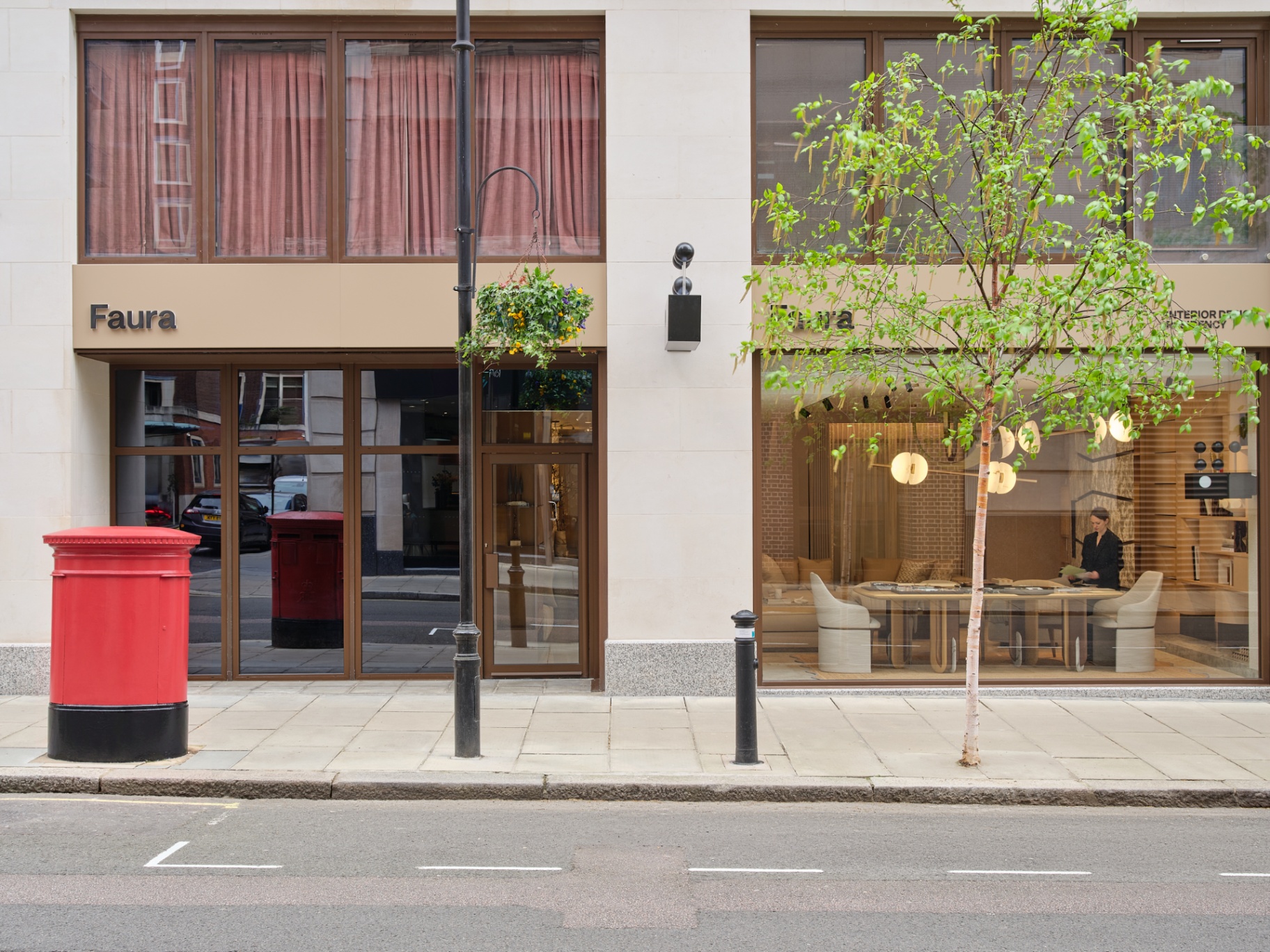
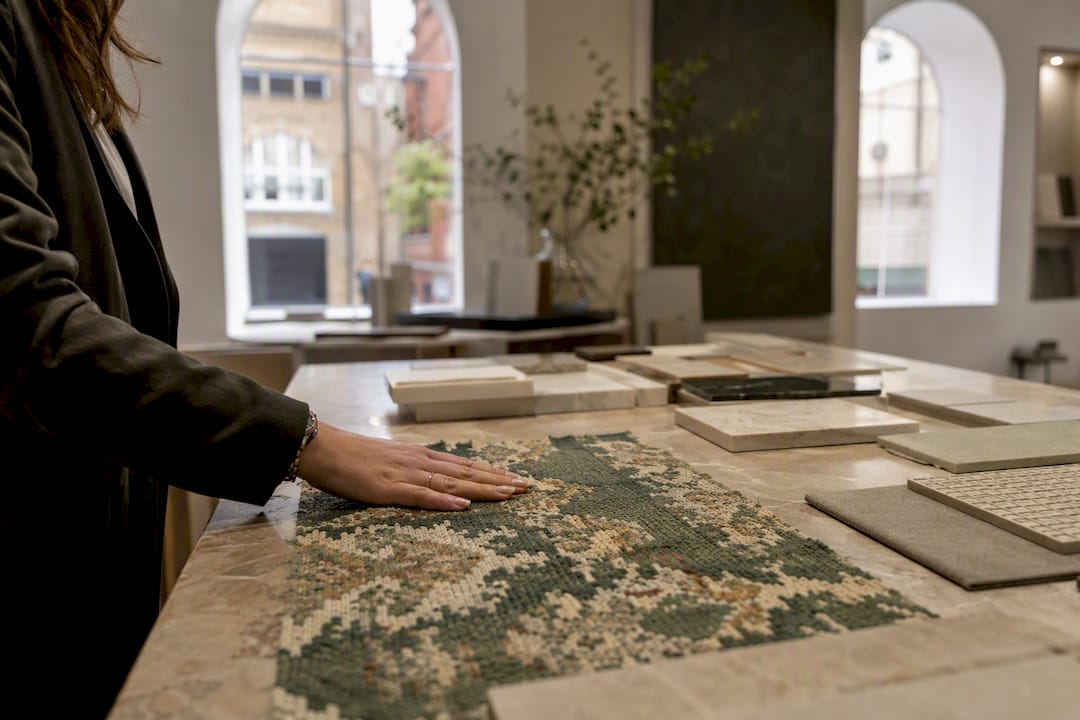
Faura operates a trade-only showroom and design residency in Westminster, built specifically for the pressure points that festival weeks create. Its curated product library spans over 200 brands, which means designers can compare specification options against a live project brief without booking separate appointments across the city.
During busy periods like September and March, that consolidation matters. A designer juggling showroom appointments across Chelsea and Shoreditch can book a Faura appointment between them to host a private client meeting on-site.
Treating designers as clients, not just intermediaries, changes what a showroom visit can achieve during a week when time is the scarcest resource.
Faura’s core offering for festival visitors includes:
- Trade-only showroom access with procurement support across over 200 brands.
- Private client hosting for meetings that need a calm, professional setting away from a crowded exhibition floor.
- Project execution support that continues after the festival closes, so a sample found in Shoreditch doesn’t stall in procurement limbo.
Designers can book a trade appointment ahead of festival week to secure a slot before the diary fills.
How did London Design Week become what it is today?
London’s design calendar didn’t start as two coordinated windows. The London Design Festival launched in 2003 as a citywide initiative to position London alongside Milan and Paris as a design capital, built around independent exhibitions rather than a single trade hall. Over two decades it grew from a handful of participating venues into the district structure it uses now, with the number and boundaries of districts adjusted most years to reflect where creative activity is concentrated.
Shoreditch’s rise within that structure reflects a broader shift in the city’s design economy. What began as a scattering of independent studios and material innovators became dense enough to justify its own week-long identity, distinct from the citywide festival that contains it. Material Matters relocating into Shoreditch for 2026 continues that trajectory: the fair now sits inside the district it’s most aligned with, rather than at a separate venue.
The March show at Design Centre Chelsea Harbour developed on a parallel but separate track. Chelsea Harbour has operated as a dedicated trade destination for decades, built around permanent showrooms rather than pop-up exhibitions. Its March week evolved as a counterpoint to September: a focused, single-site event for trade buyers who want depth over breadth, timed deliberately away from the festival’s citywide sprawl.
Together, the two calendars now give designers a spring show built for procurement and an autumn festival built for discovery and networking. Understanding that division helps you decide which week deserves your travel budget for a given project.
Who should you watch across London Design Week 2026?
With 600 brands at Chelsea Harbour and hundreds more across eleven festival districts, no one can track every exhibitor. Focus instead on categories most likely to shape specification decisions this year.
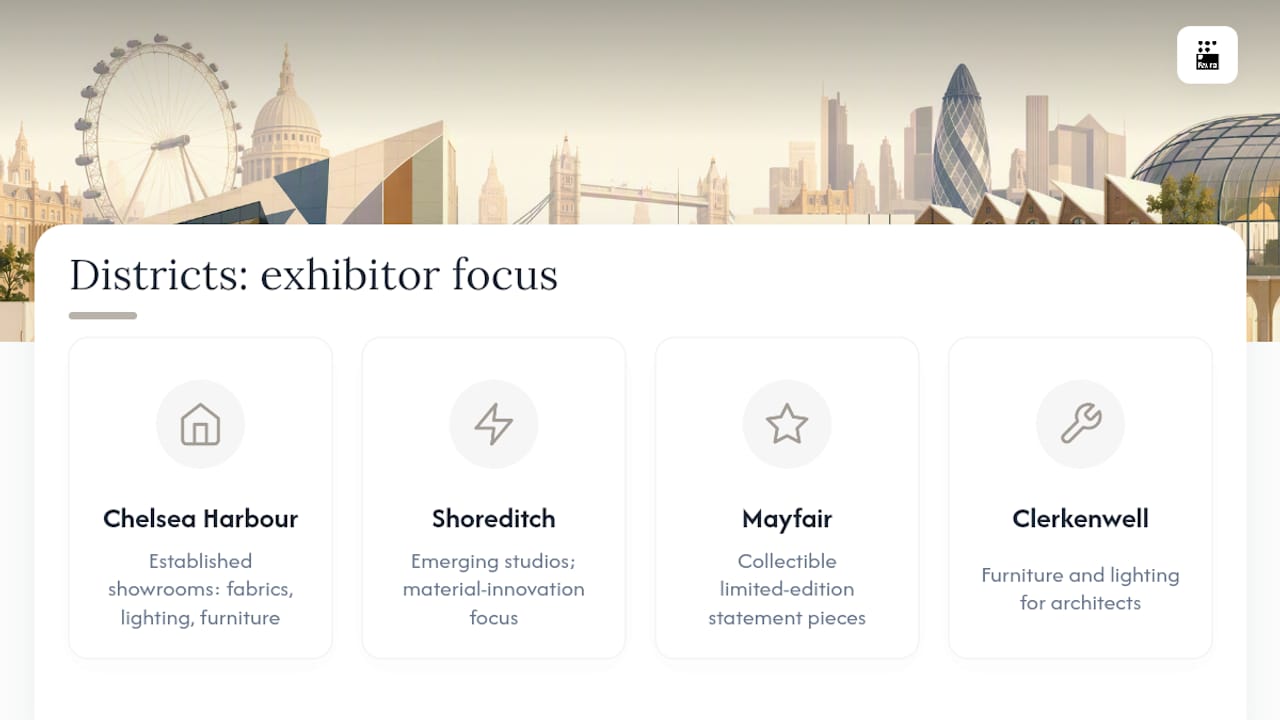
Established showroom brands at Design Centre Chelsea Harbour continue to anchor the March week, with launches typically timed to coincide with the opening days of the show. Expect fabric houses, lighting specialists and furniture makers to use the concentrated footfall for new collection reveals rather than saving them for standalone launches later in the year.
Within Shoreditch, watch the emerging studios showing at Material Matters rather than the established names. The fair’s positioning around material innovation means smaller, newer suppliers often get equal stand prominence to larger manufacturers, which is precisely the point: it’s a discovery platform, not a hierarchy.
Mayfair’s galleries typically feature collectible and limited-edition design pieces rather than production furniture, worth a visit if a project calls for statement pieces rather than specified runs. Clerkenwell remains the reliable destination for furniture and lighting brands serving architects and commercial specifiers.
Rather than chasing a fixed list of names, the more useful approach is sector-matching: identify which one or two districts align with your current project type, then let the exhibitor list for that district guide your day. A hospitality specifier gains more from an unplanned wander through Shoreditch’s newer stands than from a scripted visit to a brand they already know.
What special installations define the 2026 programme?
Material Matters relocating fully into Shoreditch Design Week is the most structurally significant change for 2026. Rather than a standalone fair at a separate venue, it now sits inside a broader trade cluster at UNLOCKED Shoreditch, giving visitors a single geographic base for both the material fair and Shoreditch’s other curated exhibitions across 15 to 17 September.
The Global Design Forum’s three-day programme at the V&A gives the festival a fixed thought-leadership anchor each year, with panels and talks scheduled around the specific themes curators choose for that edition. Because the Forum sits at the very start of the festival window, 12 to 14 September, it works well as the first stop before districts open fully for showroom visits.
Beyond the confirmed fair relocations and forum dates, exhibition content within each district varies year to year as participating studios and brands change.
Where do you network during London Design Week?
Festival weeks generate as much value in conversations between appointments as in the exhibitions themselves. The Global Design Forum’s panel sessions at the V&A double as informal networking points, with attendees often clustering before and after talks.
INCLUDE London, which ran from 9 to 11 September 2026 at the Royal College of Art in Battersea, is an academic conference on inclusive design research, better suited to designers interested in inclusive practice than to supplier meetings.
Trade showrooms themselves function as informal networking venues during festival week. Chelsea Harbour’s March show, with over 600 brands and 30-plus house guests under one roof, naturally produces cross-introductions between designers working the same floor. Faura’s private client hosting model extends that same logic into September and March, giving designers a base to bring collaborators or clients without competing for space on a crowded exhibition floor.
Evening previews and launch events, hosted by individual showrooms and brands throughout both weeks, tend to be the most productive networking moments precisely because they’re smaller and less transactional than the daytime trade floor.
Where should you stay and eat during festival week?
Accommodation strategy during festival week comes down to which district you’re prioritising, since London’s design clusters are spread across several postcodes with no single central base that suits all of them.
Staying near South Kensington or Chelsea puts you within easy reach of both Chelsea district events and the Global Design Forum at the V&A, useful if your itinerary leans towards showrooms and forum sessions rather than Shoreditch’s material fairs. For designers prioritising Shoreditch Design Week and Material Matters, a base around Shoreditch High Street or Old Street cuts transit time significantly, given both fall within walking distance of UNLOCKED Shoreditch.
Dining during festival week tends to follow the same district logic as the exhibitions. Shoreditch’s restaurant scene, already dense with independent operators, gets busier during the design week, so booking ahead for evening meals near Curtain Road is worth doing once your daily schedule firms up. Chelsea and South Kensington offer a calmer, more traditional dining scene better suited to client meals or quieter debriefs after a full showroom day.
For a multi-day visit spanning both Chelsea and Shoreditch events, a central London base, such as somewhere near Clerkenwell, offers a workable middle ground, keeping both ends of the festival within a reasonable taxi or tube journey rather than committing fully to one district.
What sustainability themes should you expect in 2026?
Material innovation sits at the centre of Shoreditch’s trade programming, and Material Matters is explicitly built around that focus, showcasing new approaches to interiors and product design materials rather than finished furniture pieces. That positioning naturally draws exhibitors working on lower-impact materials, recycled content and alternative manufacturing processes, since those are the innovations most likely to earn a stand at a fair built around material discovery.
Expect sustainability themes to surface less as a dedicated exhibition and more as a thread running through individual exhibitor stories, particularly among the smaller studios exhibiting at Material Matters rather than the established showroom brands at Chelsea Harbour. Larger brands at the March trade show increasingly fold sustainability credentials into standard product literature rather than presenting it as a separate theme, reflecting how mainstream the conversation has become within trade procurement.
For designers specifying against sustainability briefs, Shoreditch’s concentrated three-day window from 15 to 17 September is the more efficient place to audit multiple material innovations side by side, rather than seeking out individual sustainability-focused stands scattered across eleven districts. Bringing specific project requirements, such as embodied carbon targets or recycled content minimums, gives you a concrete filter for a fair that otherwise covers a very broad material remit.
Key Takeaways
London Design Week 2026 spans two distinct windows, a September city-wide festival and a March trade show, and covering both efficiently requires district-based planning and pre-booked appointments.
| Point | Details |
|---|---|
| Two separate windows | London Design Festival ran 12–20 September 2026; Design Centre Chelsea Harbour’s trade show ran 9–13 March 2026. |
| Shoreditch is trade-dense | Shoreditch Design Week (15–20 September) and Material Matters (15–17 September) concentrate material sourcing into a three-day period. |
| March show is high-volume | Chelsea Harbour’s March week hosts 135+ showrooms and 600 brands, so pre-booked appointments beat walk-ins. |
| Plan by district, not by event | Blocking half-days per district cuts wasted transit time across London’s eleven festival zones. |
| Book trade sourcing early | Faura’s trade showroom and library of over 200 brands help designers consolidate sourcing during festival weeks. |
Why practical route planning matters more than exhibitor lists
The conventional advice for design weeks tends to fixate on exhibitor lists and headline installations. That’s the wrong starting point. The research behind this guide points to a simpler truth: professionals who plan by district, book appointments early and accept they cannot see everything get more out of the week than those chasing a comprehensive itinerary.
Shoreditch’s evolution into a trade-dense hub, with Material Matters folding into it for 2026, is the clearest signal of where the festival is heading. Concentration beats sprawl. The same logic applies to sourcing itself. Running between a dozen scattered showrooms during a single festival week produces less useful specification progress than a single, well-resourced base where samples, procurement terms and client meetings can happen under one roof.
That’s the gap most festival guides miss. They tell you what’s on. They rarely tell you how to convert a week of exhibitions into actual project progress once the stands come down. Prioritise the district that matches your current brief, book your appointments before the diary fills, and treat sourcing as a task to consolidate rather than scatter across nine days.
— Faura Editorial
Sources
- First Look: London Design Festival 2026
- The Fair — Material Matters
- Shoreditch Design Week | 15-20 September
- INCLUDE London 2026 | Royal College of Art