Vendor onboarding checklist for brands joining a trade showroom
By Faura ·


Brands approaching a trade showroom should typically prepare a brand dossier, showroom-ready samples and a clear trade price list. Faura confirms its own process and terms directly with each brand.
The full sequence brands need before outreach looks like this:
- A brand dossier: bio, technical specifications, high-resolution imagery
- A trade price list, with lead times and minimum order quantities
- Two showroom-ready samples, including one statement piece
- Proof of public and product liability insurance
- Agreed launch commitments for the first 90 days
Faura works with over 200 brands across furniture, lighting, stone, bathrooms, textiles, paint and architectural hardware.
Key Takeaways
Approaching any trade showroom goes more smoothly when you arrive with a complete dossier, showroom-ready samples, clear commercial terms and communication commitments.
| Point | Details |
|---|---|
| Lead with a complete dossier | Submit brand bio, high-res images, specifications and a trade price list together, not piecemeal. |
| Send showroom-grade samples | Two SKU types plus one statement piece, labelled with SKU, price and lead time. |
| Settle commercial terms early | Agree trade pricing, commission, RRP guidance and returns policy before the contract stage. |
| Set SLAs before launch | Define response times and a named escalation contact on both sides. |
| Faura provides the platform | Faura’s showroom and residency work with over 200 brands, and Faura confirms terms directly with each brand. |
Table of Contents
- What are Faura’s eligibility and curation criteria?
- What goes into your brand dossier and application?
- How should you prepare and ship samples?
- What commercial terms should you expect to negotiate?
- What are Faura’s showroom presentation standards?
- How do lead handling and communication SLAs work?
- What legal and insurance documents does onboarding require?
- What does the 0 to 90 day onboarding timeline look like.
- Why this onboarding process exists
- How Faura supports your onboarding from application to launch
- Frequently asked questions
- Sources
What are Faura’s eligibility and curation criteria?
Before writing a single word of your application, check the fit honestly. Faura curates rather than accumulates, and a mismatched submission wastes everyone’s time.
Ask yourself:
- Does the design language sit comfortably alongside a considered, neutral-toned showroom aesthetic?
- Does the price band match a trade audience specifying for private residences and commercial fit-outs?
- Can production handle trade order volumes and realistic lead times without delay?
- Are provenance, materials and sustainability claims documented and verifiable?
Designers tend to judge a showroom on spatial quality, lighting, product presentation, location and overall brand environment, according to one manufacturer’s guide on how luxury furniture designers choose their dealers. A brand entering that environment needs to hold its own against those standards, not just fill a gap on a shelf.
Before reaching out, work through three questions:
- What annual order volume can you realistically fulfil through a trade channel?
- Can you commit to at least one showroom event or sample refresh in year one?
- Do you have two or three trade references who can vouch for your reliability?
What goes into your brand dossier and application?
A complete submission moves faster through review. Showroom teams typically assess fit and readiness together, so incomplete files tend to slow the review.
Your dossier must include:
- A concise brand bio covering history, design philosophy and manufacturing base
- High-resolution product images (studio shots, minimum 300dpi)
- Technical specifications: dimensions, materials, finishes, weight
- A trade price list separate from any retail pricing
- Lead times and minimum order quantities per product line
Recommended additions strengthen a first impression considerably: press mentions, case studies from previous trade or showroom placements, lifestyle photography showing pieces in situ, and an active Instagram handle or portfolio link. A structured due diligence approach works both ways. A brand should arrive with its own evidence ready rather than promises to follow up later.
Pro Tip: Submit your price list as a clean CSV rather than embedded in a PDF. It shaves days off the review because pricing can be checked against your product specifications without retyping.
How should you prepare and ship samples?
Samples do the selling before a single designer walks through the door, so treatment matters as much as design.
Send showroom-ready pieces, not seconds or prototypes. Showrooms commonly ask for representative samples from your range, often including one statement piece that represents the collection’s character. Every sample needs clear labelling: SKU, trade price, lead time, a named contact, and handling instructions for anything upholstered or finished with delicate materials.
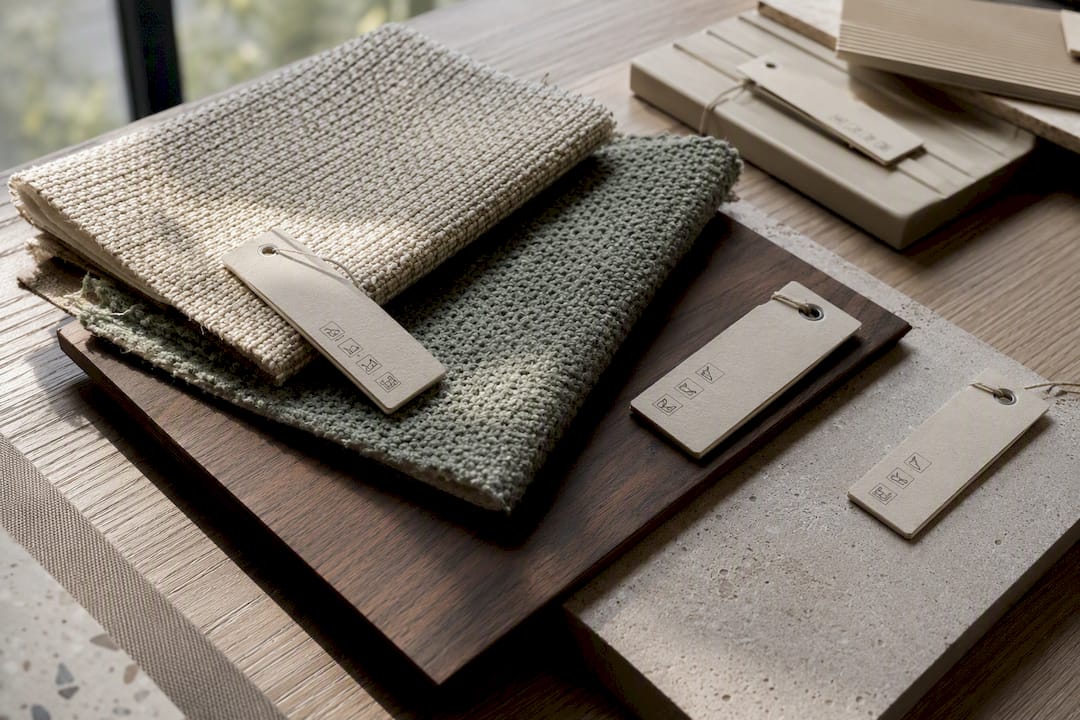
Package fragile and heavy items to trade shipping standards, with corner protection and crating where weight demands it. Agree in writing whether samples are loaned, bought or rotated, and when unsold stock is returned.
Pro Tip: Photograph your sample the moment it leaves your workshop. If a dispute ever arises over transit damage, that timestamped image is the fastest way to resolve it.
What commercial terms should you expect to negotiate?
Commercial clauses are where onboarding either accelerates or stalls, so arrive with your numbers settled rather than negotiated on the spot.
Be ready to provide:
- Trade pricing separate from your recommended retail price (RRP)
- Commission rate expectations for showroom-generated sales
- Minimum display commitment (typically a defined period per product line)
- A returns policy covering damaged or unsold stock
Expect these clauses in the representation agreement:
- Exclusivity terms defining whether the showroom holds sole trade representation in the region
- Recommended retail price (RRP) guidance, bearing in mind that UK competition law prohibits fixing minimum resale prices
- Payment terms, including any cure period before a missed payment triggers termination
- Renewal and termination triggers, stated clearly rather than left open-ended
Luxury partnerships are typically judged against intangible measures too, not just unit sales. Audience overlap, brand elasticity and earned media value all factor into how a strategic partnership is assessed, and protecting scarcity matters as much as protecting margin. Define your first 90-day milestones during negotiation: who funds the initial sample refresh, who commits marketing spend, and what a successful launch actually looks like.
What are Faura’s showroom presentation standards?
Once accepted, your product has to earn its space visually. Display standards exist because a well-curated showroom genuinely changes how a buyer perceives quality, and inconsistent presentation undermines that effect for every brand nearby.
Expect proportion, lighting angle and grouping by brand identity to be managed carefully, with sample rotation on a set schedule rather than left static for years. Each display carries a label with brand name, SKU, trade price, lead time and any relevant care notes, matching the documentation sent with your original sample.
Consistent product photography matters for the showroom’s online listings, since designers frequently specify from imagery before booking an in-person visit. Blurry phone shots or inconsistent lighting between images will hold your listing back even after physical acceptance.
How do lead handling and communication SLAs work?
Most partnership breakdowns trace back to unclear communication, not product quality. Agree explicit service-level expectations from day one so neither side is guessing who owns what.
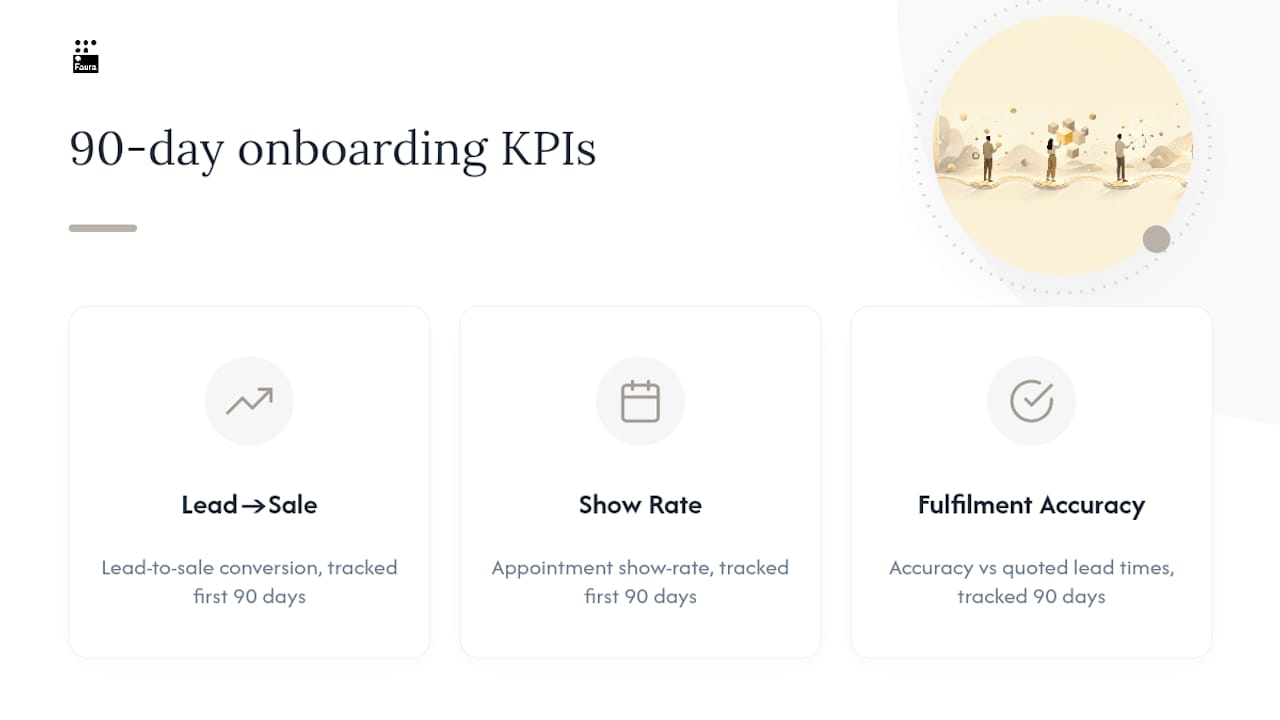
Register a named escalation contact on both sides before launch, not after the first problem arises. Track three figures through your first 90 days: lead-to-sale conversion, appointment show-rate, and fulfilment accuracy against quoted lead times. These three numbers tell you faster than anything else whether the placement is working.
What legal and insurance documents does onboarding require?
Keep this list short but non-negotiable. Expect a showroom to ask for these before a display slot is scheduled.
- A signed representation agreement with a defined reporting cadence
- Public liability insurance covering the sample while on display
- Product liability cover where the category requires it
- Written permission for Faura to use your product photography in listings and event promotion
Data ownership and termination clauses deserve particular attention. Decide now who retains customer and lead data if the partnership ends, rather than leaving it to a difficult conversation later.
What does the 0 to 90 day onboarding timeline look like.
A realistic timeline keeps both sides accountable and stops “waiting to hear back” from stretching into months.
| Days | Milestone | Owner |
|---|---|---|
| 0 to 7 | Application and dossier submitted | Brand |
| 7 | Curation review and feedback | Faura |
| — | Samples shipped and received | Brand |
| — | Contract signed, commercial terms confirmed | Both |
| — | Display built, labelling and photography finalised | Faura |
| 90 | Staff briefed, launch event window opens | Both |
Treat this as your internal working document:
- Confirm your dossier is complete before submission, not after a rejection
- Diarise the sample shipping window the moment your contract is signed
- Assign one internal owner to respond to Faura’s SLA windows
- Set a calendar reminder for your 90-day performance conversation
Why this onboarding process exists
Curation only has value when a showroom is selective, and that discipline is what gives a placement its weight with designers. A brand accepted onto the floor benefits from the credibility of every brand already there, which is a harder thing to build alone than most new entrants expect.
Faura works with over 200 brands.
How Faura supports your onboarding from application to launch
Faura is a trade-only showroom and residency in Westminster serving interior designers, architects, developers and contractors, with procurement, logistics and delivery handled by one team. Project-execution support extends this further, connecting your range to designers running full fit-out sourcing rather than one-off purchases.
Brands interested in working with Faura can contact the team via the trade page and the team will confirm next steps directly. If you’d rather see the space before committing samples, book a showroom visit and speak with the team directly about where your range would sit.
Frequently asked questions
What is a vendor onboarding checklist for a trade showroom? It’s the set of steps a brand completes to move from application to display, covering dossier submission, sample shipping, contract terms and launch milestones.
How long does onboarding to Faura typically take? Faura has not published a standard onboarding timeline; it confirms next steps directly with each brand.
Do I need insurance before sending samples? Yes. Public liability cover for the display period and product liability where relevant are expected before a sample goes on the showroom floor.
What happens to unsold samples? Arrangements for unsold samples should be agreed in writing with the showroom before they are sent.
Can I negotiate commission and trade pricing? Commercial terms are agreed directly between each brand and the showroom; Faura does not publish standard terms.
Sources
The onboarding steps above draw on established due diligence and showroom curation practice.
- The Luxury Brand Partnership Blueprint: A Strategic Framework for B2B Collaborations
- Why showrooms still matter in the digital age