Upholstery Durability for Homeowners: Seams and Care Beat 100,000 Rubs
By Faura ·
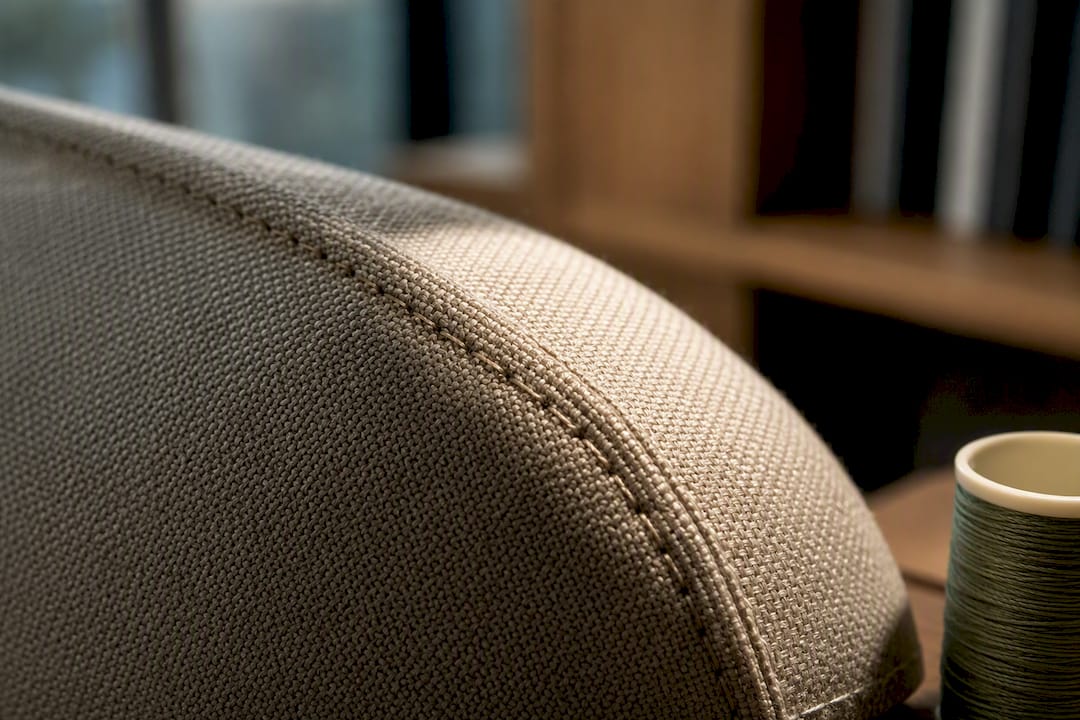
Upholstery Durability for Homeowners: Seams and Care Beat 100,000 Rubs
Upholstery fabric durability comes down to four things working together: an abrasion rating matched to how the piece will actually be used, the fibre and weave underneath that rating, the strength of the seams holding it together, and how it’s cared for afterwards. The single most useful action when choosing fabric is to set a target abrasion figure for the seat, then check pilling resistance, lightfastness and the cleaning code before you commit. Look for testing against ACT guidelines and results from Martindale or Wyzenbeek methods.
TL;DR:
- Fabric abrasion ratings should be matched to specific use levels, with higher cycle counts recommended for high-traffic and pet-prone areas.
- Seam construction, thread strength, and fabric grain significantly influence durability, often causing failures before fabric surface wear becomes visible.
- Lab-tested abrasion numbers are informative but not definitive; real-world longevity depends greatly on seam quality, care, and environment.
- Tightly woven, synthetic fibers like polyester, nylon, and solution-dyed acrylics generally outperform natural fibers in high-use or sun-exposed settings.
- Visiting a trade showroom allows for hands-on inspection of samples, seam quality, and thorough comparison beyond what data sheets can reveal.
Table of Contents
- How is upholstery fabric durability measured?
- What durability tier does your furniture actually need?
- Which fibres and constructions hold up best?
- Why do seams fail before the fabric itself does?
- How do you choose the right fabric for your home?
- What care routine actually extends a fabric’s life?
- How trade showrooms shorten the path to the right fabric
- An editorial note on lab numbers versus lived experience
- Sources
- FAQ
How is upholstery fabric durability measured?
Two testing methods dominate spec sheets, and confusing them is one of the most common mistakes homeowners make when comparing fabrics side by side.
Martindale testing (the method behind ISO 12947) rubs a fabric sample against a standard abrasive in a figure-of-eight motion and counts how many cycles it survives before visible wear appears. This is the number you’ll see most often on European and UK spec sheets, sometimes reaching well beyond 100,000 cycles for hard-wearing weaves. Wyzenbeek testing (ASTM D4157), more common on American product lines, uses a back-and-forth rubbing action measured in “double rubs.” The two scales are not directly convertible. As Kvadrat’s guidance on fabric performance indicators explains, a fabric rated at 100,000 Martindale cycles doesn’t correspond neatly to 100,000 Wyzenbeek double rubs. If a supplier quotes one figure without specifying the method, ask which test it is.
Abrasion is only the headline number. A genuinely durable fabric spec sheet should also show:
- Pilling resistance, tested to ASTM D3511 or an equivalent ISO method, which predicts whether the surface will bobble after light friction from clothing and cushions.
- Breaking strength (ASTM D5034), which measures how much force the fabric can take before it tears.
- Seam slippage (ASTM D4034), showing how easily threads pull apart at a stitched join under tension.
- Lightfastness, tested under AATCC or ISO methods, which predicts fading from sun exposure.
The ACT performance guidelines for abraded woven indoor fabrics are explicit that abrasion numbers, however impressive, are not a reliable stand-in for real-world lifespan. A fabric can pass 200,000 rub cycles in a lab and still fail early through pilling, dye migration, or a seam giving way.
What durability tier does your furniture actually need?
Not every chair in your home needs the same performance level, and buying contract-grade fabric for a rarely-used bedroom chair wastes money you could put towards a better weave elsewhere. Industry guidance groups fabrics into rough tiers by Martindale cycles, and the ACT guidelines map recommended minimums by end use:
- Light domestic use (occasional chairs, bedroom seating): a moderate number of Martindale cycles is generally acceptable for light domestic use.
- General domestic use (family sofas, dining chairs used daily): look for a moderate minimum number of cycles is recommended for general domestic use.
- Heavy domestic use (households with children, pets, or a sofa that doubles as the main lounging spot): push towards a higher number of cycles is advised for heavy domestic use.
- Contract or high-traffic use (rentals, home offices seeing multiple daily users): a substantial cycle count, often paired with a coated or performance finish, is advised for contract or high-traffic use.
These are starting points, not guarantees. Choose the higher end of a tier if the piece sits in direct sunlight, gets cleaned frequently with harsher products, or lives with pets whose claws catch on loose weaves. A pale linen blend rated for general domestic use will still fade faster near a south-facing window than a solution-dyed alternative rated at the same cycle count.
Which fibres and constructions hold up best?
Fibre choice sets the ceiling on how a fabric will age, even before abrasion numbers come into play. Here’s how the common options generally perform:
- Polyester is the workhorse of durable upholstery: strong, resistant to fading, and affordable, though cheaper polyester blends can pill within a year or two of regular use.
- Nylon brings excellent tensile strength and is often blended with other fibres specifically to boost abrasion resistance without adding bulk.
- Wool and wool blends wear well and resist soiling naturally, but pure wool can be more vulnerable to sun fading than synthetic alternatives, and coarse blends benefit from a Trevira CS or similar reinforcement.
- Leather doesn’t use the Martindale or Wyzenbeek scales at all, ages by developing a patina rather than visible wear, and remains one of the most forgiving choices for households with pets, provided it’s the right grade of hide.
- Solution-dyed acrylics have colour woven into the fibre itself rather than applied afterwards, which makes them notably resistant to fading, a point Global Fabric Wholesale’s durability guide highlights for sun-exposed rooms and conservatories.
- Olefin resists moisture and staining well, making it a sensible choice for spill-prone households, though it can be less forgiving on comfort.
- Coated or polyurethane-finished fabrics add a protective layer over a woven base, boosting cleanability and stain resistance dramatically, at some cost to the natural hand-feel of the textile.
Weave density and weight (measured in grams per square metre) matter as much as fibre type. A tightly woven, heavier fabric generally resists abrasion better than a loose, lightweight one made from the same yarn, and the backing applied during manufacture can materially change how a fabric performs under a Martindale or Wyzenbeek test. For spill-prone rooms or anywhere catching direct sun for several hours a day, a coated fabric or solution-dyed acrylic will usually outlast a natural fibre with an equivalent rub count.
Why do seams fail before the fabric itself does?
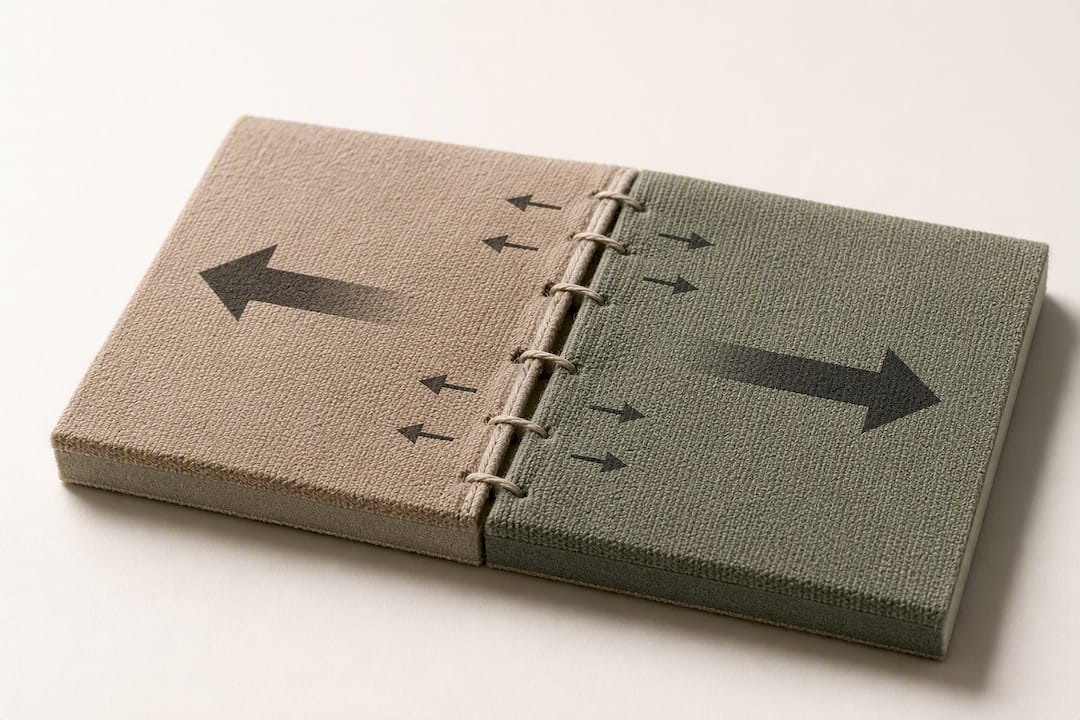
Homeowners fixate on abrasion numbers and then wonder why a sofa arm splits along a seam within two years while the seat fabric itself looks barely touched. Peer-reviewed tensile testing on upholstery seams found that seam construction, fabric type and even the direction the pieces were cut all materially change how and when a joint fails under tension, often well before the surrounding fabric shows abrasion damage.
When you’re assessing a piece, or briefing an upholsterer, ask about:
- Stitch type and density (stitches per inch), which affects how evenly load is distributed along a seam.
- Thread strength, matched to the fabric weight rather than a generic default.
- Seam reinforcement at stress points like arm fronts and back corners, where tension concentrates.
- Cutting direction relative to the fabric grain, which the seam research found changes failure patterns significantly.
Pro Tip: When a sofa or chair arrives, run your fingers along every seam under light tension. A seam that feels loose, puckered, or unevenly stitched now will be the first thing to fail, often within the first year of regular use, long before the fabric itself shows wear.
How do you choose the right fabric for your home?
Turning all of this into an actual purchase decision is simpler if you work through it in order rather than falling for the first fabric that looks right in a catalogue.
- Assess who actually uses the piece. Children, pets, and heavy daily use all push you towards a higher abrasion tier and a coated or performance finish.
- Set your minimum targets before you shop, covering abrasion rating, pilling resistance and lightfastness, not just one figure in isolation.
- Request a physical swatch, not just a photo. Fabric that looks robust on screen can feel thin or loosely woven in hand.
- Ask for the full spec sheet, including the cleaning code and seam construction details, not only the headline rub count.
- Lean towards leather or heavily coated fabrics if the room sees frequent spills, pets, or sun exposure that would challenge a natural woven fibre.
- Check the warranty and returns policy on the upholstered piece itself, since a strong fabric badly upholstered still fails early.
Seeing samples under your own room’s light, rather than a showroom’s, catches colour and texture issues that a spec sheet never will.
What care routine actually extends a fabric’s life?
Maintenance habits change how long a sofa or chair genuinely lasts far more than most homeowners expect from a routine that takes minutes a week.
Vacuum upholstery weekly using a soft brush attachment to lift grit before it works into the weave and abrades fibres from the inside, which is often a bigger cause of premature wear than surface friction from sitting. Treat spills immediately, following the fabric’s cleaning code: W for water-based cleaners, S for solvent-based only, WS for either, and X for vacuum-only fabrics that can’t tolerate liquid cleaning at all. Rotate and flip cushions regularly to even out wear across the seat, and keep upholstered pieces out of direct, prolonged sunlight where possible, since UV exposure is one of the fastest routes to visible fading regardless of how high the abrasion rating is.
- Avoid steam cleaning on any fabric where the manufacturer’s care label warns against it, since heat and moisture can shrink or distort certain weaves.
- Book professional cleaning roughly once a year for heavily used pieces, more often in pet or family households.
- Protective impregnation treatments can help spill resistance on many synthetics, but they can also alter the hand-feel or breathability of naturals like wool, and some manufacturers explicitly advise against them on treated wools or Trevira CS fabrics.
Industry guidance generally treats anything beyond 100,000 double rubs as offering diminishing real-world returns; past that point, sunlight, cleaning frequency and seam quality do far more to determine how long a piece actually lasts than the lab number on the spec sheet.
How trade showrooms shorten the path to the right fabric
Verifying all of this yourself, fabric by fabric, supplier by supplier, is exactly the friction that a curated trade showroom is built to remove. Faura’s Westminster residency gives designers and their private clients access to a curated library spanning more than 210 brands, alongside procurement support and private hosting for exactly this kind of hands-on comparison.
- Real samples under real light, rather than a printed swatch card, make abrasion and colour claims easier to judge.
- Seam construction, backing quality and cleaning codes can be checked in person before a fabric is specified.
- Procurement support and existing supplier relationships remove much of the sourcing legwork a designer would otherwise carry alone.
For a piece that will see years of daily family use, that kind of direct comparison against a documented spec sheet is worth more than any single number on a data sheet.
An editorial note on lab numbers versus lived experience
Lab tests are useful filters, not guarantees. A fabric with an exceptional Martindale rating can still disappoint if the seams are cut against the grain or stitched with the wrong thread, which is precisely what the seam-strength research on upholstery construction demonstrates. Treat abrasion figures as the first filter, not the final word, and physically inspect seams and stitching before you buy.
For a sofa that has to survive a decade of family life, or any piece with real financial or sentimental weight, it’s worth talking to a designer or visiting a trade showroom rather than relying on a spec sheet alone.
— Eugene
Sources
The ACT performance guidelines set out abrasion thresholds by end use. Kvadrat’s performance indicators page explains Martindale versus Wyzenbeek testing, and Gov cover the statutory safety side of upholstered goods.
- ACT performance guidelines (abraded woven indoor, Feb 2025)
- Kvadrat — key fabric performance indicators
- Materials (MDPI) — study on tensile strength of upholstery seams (2022)
FAQ
What are the different grades of upholstery fabric?
Fabrics are generally grouped by Martindale cycle count into light domestic use, general domestic use, heavy domestic use, and contract or high-traffic use, with recommended minimum cycles rising through those tiers.
What are the most common problems with upholstery?
The most frequent issues are pilling on the fabric surface, seam slippage at stress points like arm fronts, colour fading from sun exposure, and premature wear from grit worked into the weave rather than surface friction alone.
How long should a fabric sofa last?
A well-specified fabric sofa in general domestic use, cared for with regular vacuuming and prompt spot cleaning, can reasonably last eight to fifteen years, though heavy households with children or pets should expect the lower end of that range unless the fabric is rated for heavy domestic or contract use.
Which sofa fabric lasts the longest?
Tightly woven polyester, nylon blends, solution-dyed acrylics and quality leather tend to outlast loosely woven naturals, particularly in sun-exposed or pet-heavy homes, though the seams and construction often determine lifespan as much as the fabric itself.