10 iconic designer dining chairs
Ten designer dining chairs from brands Faura represents, with the designer, materials and construction taken from each maker. A guide for interior designers and their clients.
Faura · · 8 min read
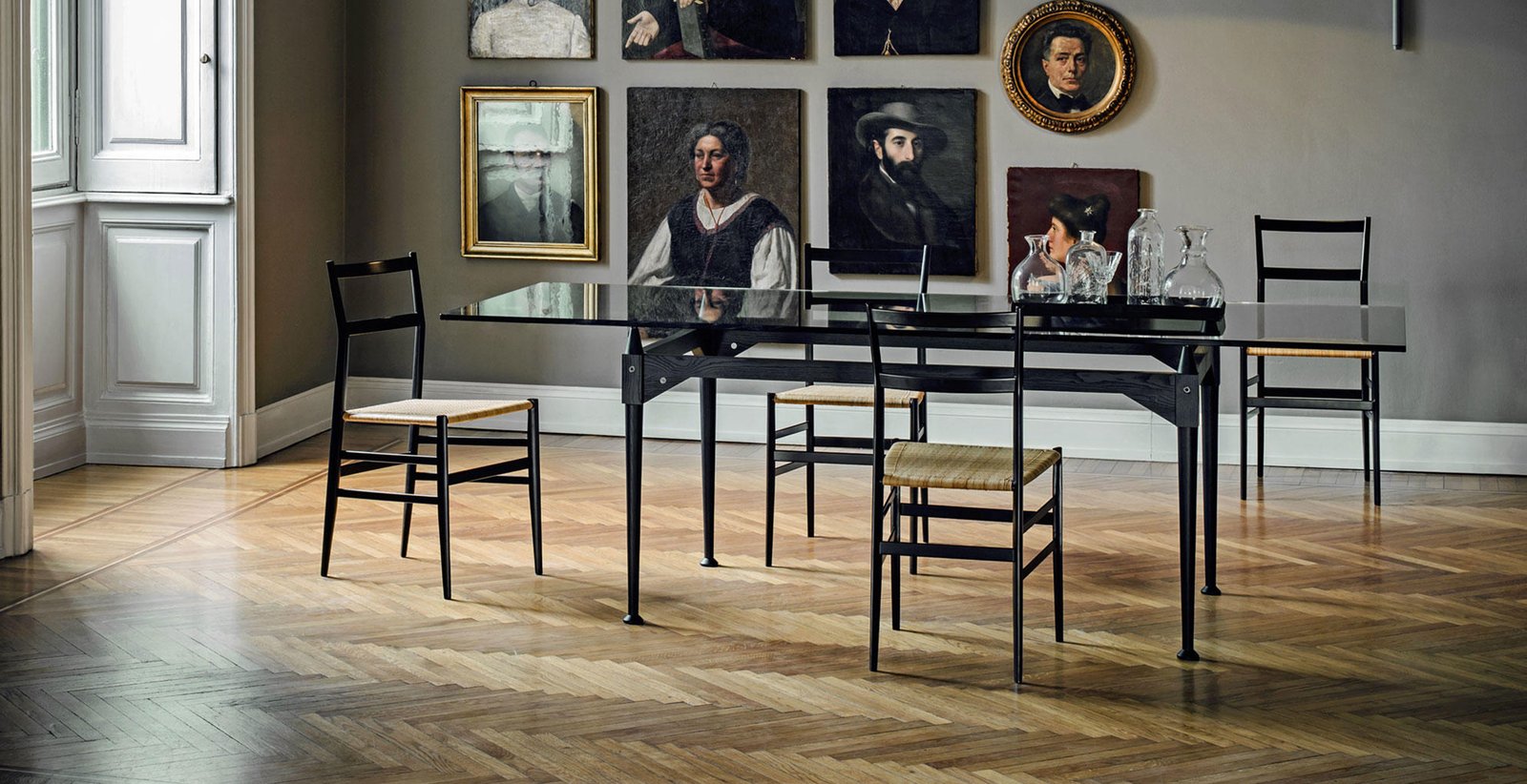
Dining chairs get more search interest than any other seat in the home, and most guides to them list products anyone can buy anywhere. This one is narrower. It features ten designer dining chairs from Italian and European makers that Faura represents, with the designer, the materials and the construction taken from each maker's own website. Faura is a private showroom and residency in Westminster that works with independent interior designers, so we see how these chairs are specified from the trade side.
TL;DR:
- Ten designer dining chairs from nine brands Faura represents: Cassina, Bonaldo, Zanotta, Rugiano, Miniforms, Gallotti&Radice, Porada and Magis.
- Two of the oldest designs are Cassina's 699 Superleggera (Gio Ponti, 1957) and Cab (Mario Bellini, 1977).
- Every fact comes from the maker's product page, which we link. We give no prices and no rankings.
- Check seat height, arm clearance and fabric before you order, and mix no more than two chair designs.
- Faura is trade-only: see and compare these chairs by appointment, through one trade account.
Contents
- 699 Superleggera by Cassina
- Cab by Cassina
- Youpi by Bonaldo
- Tonietta by Zanotta
- Manta by Rugiano
- Claretta by Miniforms
- 0414 by Gallotti&Radice
- Ella by Porada
- Chair_One by Magis
- Dumbo by Miniforms
- How to choose
- Specify them through Faura
- Questions people ask
1. 699 Superleggera by Cassina
Gio Ponti designed the 699 Superleggera in 1957, and Cassina has made it ever since. The name means very light, and the figures back it up: the legs have a cross-section of just eighteen millimetres and Cassina gives the whole chair as 1,700 grams. The frame is solid ash for its flexibility, the seat surround is beech, and the seat is woven by hand, a method taken from the chair-making tradition of Chiavari in Liguria. It comes in the classic version, with coloured legs, or with a padded seat. In a home it suits the dining table that is pulled out and pushed back every day, because a chair this light is easy to move.
See Cassina at Faura | Cassina product page
2. Cab by Cassina
Mario Bellini designed Cab in 1977. Cassina describes it as the first free-standing cowhide chair, with the leather acting as both skin and structure over a steel skeleton. The cover is made from sixteen pieces of saddle leather, each die-cut and then put through fourteen separate hand operations. It is sewn only once the edges are trimmed, then fitted to the steel frame and closed with a zip, like a tailored garment. That construction is why Cab is a design reference rather than just a good dining chair. Choose it where you want a softer, more tactile alternative to wood or upholstery, in a dining room with a leather bench or darker joinery.
See Cassina at Faura | Cassina product page
3. Youpi by Bonaldo
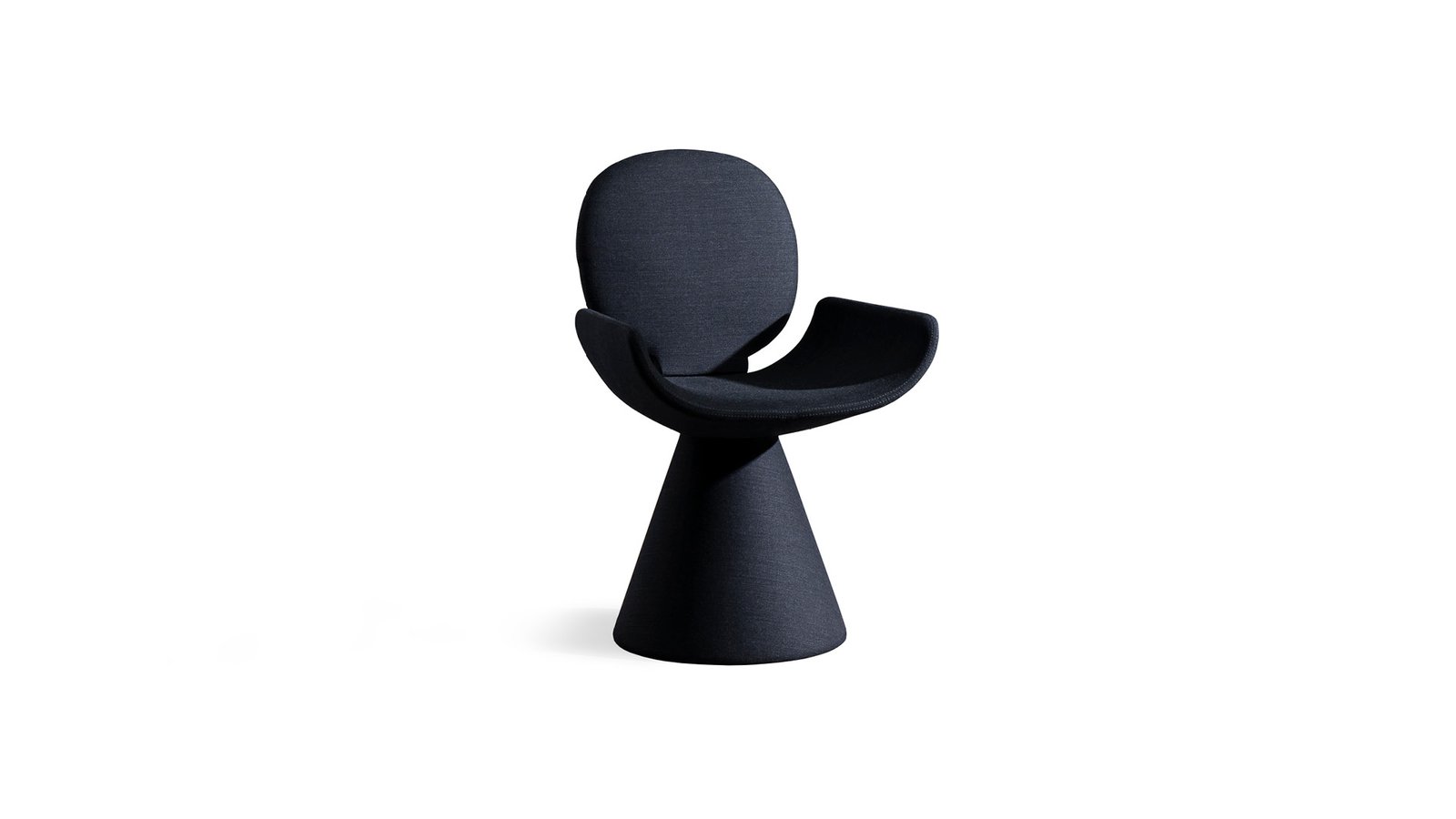
Youpi was designed by Fabrice Berrux. Bonaldo says its profile seen from behind recalls a stylised human figure, and that the chair is covered entirely in fabric or leather: a circular backrest flows into a wide seat, supported by a flared conical base. There is also a version with four metal legs. Bonaldo gives the dimensions as 58 cm wide, 55 cm deep and 82 cm high for both versions, which is a compact footprint for a chair that looks generous. Youpi works around a round or oval table where the backs are seen from every side, and in open-plan rooms where the dining area sits in view of the sofa.
See Bonaldo at Faura | Bonaldo product page
4. Tonietta by Zanotta
Zanotta says Tonietta started in 1981 and was finished in 1985, after constant engineering work to use aluminium die casting, a costly technology rarely applied to a domestic chair at the time. The frame is polished or black-painted aluminium alloy, and the seat and back are polypropylene covered in cowhide. The jury of the 1987 Compasso d'Oro called it a great lesson on style and culture when it gave the chair the award, which Zanotta quotes on its page. Its designer wanted the simplest chair possible, with the archetype of the bentwood chair as a starting point. The result is a slim, graphic chair that suits a dining table with a strong top, such as stone or glass, where a heavier chair would crowd the room.
See Zanotta at Faura | Zanotta product page
5. Manta by Rugiano
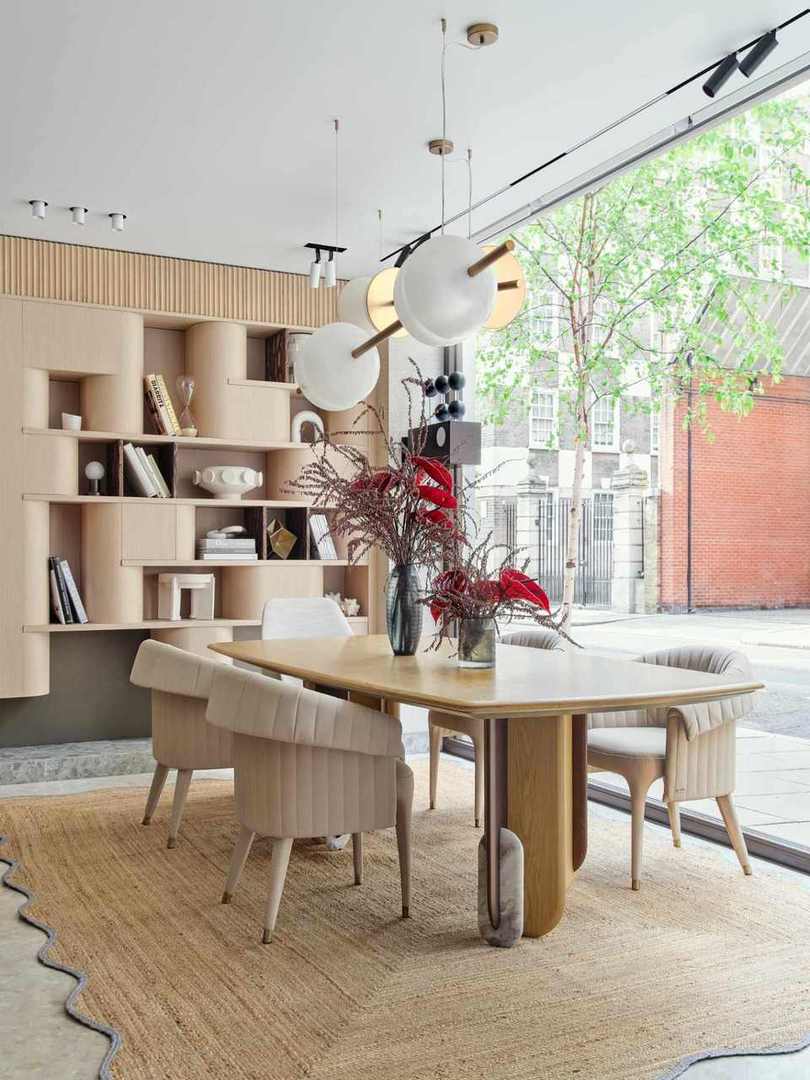
Manta is a dining chair where the backrest and armrests join in one continuous curve. Rugiano describes a vertical upholstery pattern that runs across the whole back, rhythmic stitching that gives depth, a wide soft seat and slender legs finished with metal tips. It is designed for dining rooms rather than occasional use, and the arms are the useful part: guests stay seated at a long dinner without leaning back on a hard edge. The curved arm also needs room, so check the clearance under your table apron before ordering a full set. Manta works well at the heads of a table with lighter side chairs, or all round a table in a room where comfort matters more than a rigid look.
See Rugiano at Faura | Rugiano product page
6. Claretta by Miniforms
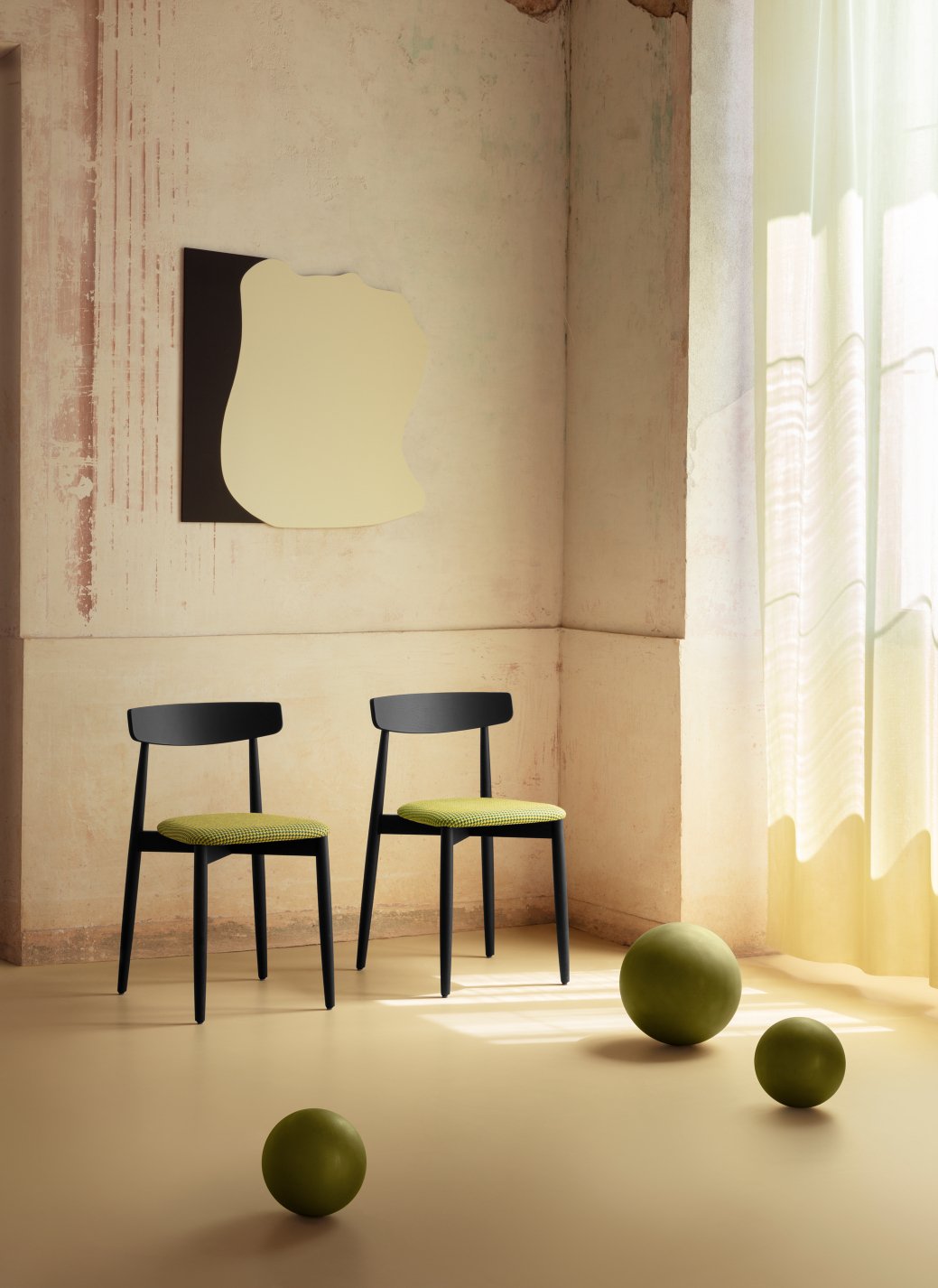
Claretta takes its cue from the traditional bistro chair. Miniforms calls it Parisian in character: slender and neatly drawn, with turned legs that join the backrest in an assertive way, and a backrest that tilts out slightly towards the top. It stacks up to five high, and also comes with armrests and as a stool, which makes it one of the more practical entries on this list. A bistro chair earns its place in a kitchen or a breakfast room, where the table might also serve as a desk or a place for homework.
See Miniforms at Faura | Miniforms product page
7. 0414 by Gallotti&Radice
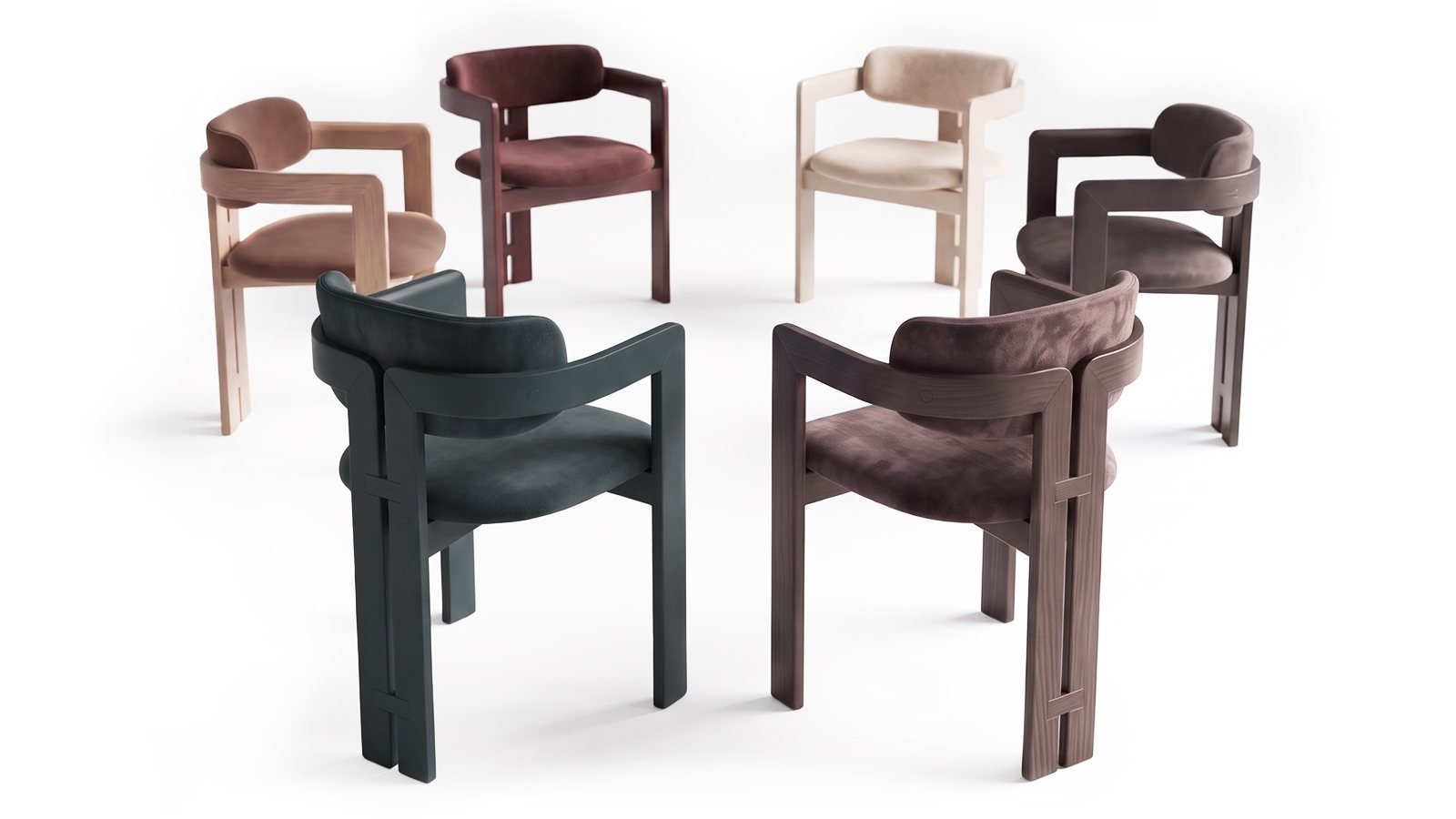
The 0414 is a chair with arms made from solid wood. Gallotti&Radice offers it in natural ash or open-pore stained ash in black, wenge, smoke grey, tobacco, clay, ash and a white called Pure, or in matt-lacquered beech in a long list of named colours, including Camargue White, Jaipur Pink and Pacific Blue. The seat and back are padded with polyurethane foam of differing densities, covered in fabric or leather, and the cover is not removable. The maker presents it for homes and for contract use. Its colour range is the reason to choose it: a lacquered 0414 in a deep tone can anchor a dining room that otherwise has neutral walls and a pale table.
See Gallotti&Radice at Faura | Gallotti&Radice product page (Italian)
8. Ella by Porada
Patrick Jouin designed Ella for Porada, drawing the project from the Louis armchair. Porada says he drew the dining chairs in Sedona, Arizona, with American and Japanese woodworking in mind, and that the curved back and arms are made possible by a five-axis machining process. The frame is solid Canaletta walnut, in a natural finish, or stained moka or wenge, and the seat cushion can be covered in the fabrics or leathers of the Porada collection. Because the wood is the main material, grain and finish matter more than on an upholstered chair, so ask to see the walnut in daylight.
See Porada at Faura | Porada product page
9. Chair_One by Magis
Konstantin Grcic designed Chair_One for Magis. The version with a four-star base swivels, and Magis makes the base and seat in die-cast aluminium treated with sputtered fluorinated titanium and painted in polyester powder. The material is flame-retardant and suitable for outdoor use, and cushions are available in Kvadrat Steelcut Trio, Kvadrat Steelcut 3 or leather indoors, and in polyurethane outdoors. An industrial-looking chair like this suits a kitchen island, a dining table in a loft-style room, or a covered terrace that is used as a dining room in summer.
See Magis at Faura | Magis product page
10. Dumbo by Miniforms
Miniforms calls Dumbo its universal padded chair, generous but lightweight. The backrest appears to have two ears extending from it, which makes the chair look bigger and cosier than its slim frame suggests. As a padded chair it suits the opposite job to Claretta: long family meals and rooms where people stay at the table, whether in a kitchen-diner or a dining room used as a study.
See Miniforms at Faura | Miniforms product page
How to choose
Start with the table. Chair seat height should leave about 25 to 30 cm to the underside of the tabletop. Measure the table apron, not only the top, before you pick a chair with arms.
Choose the material for how the room is used. Ash, walnut and beech age well and can be refinished. Leather and tightly woven fabric take family use, and open weaves need more care.
Decide between arms and no arms. Armchairs give comfort at long dinners but need room to pull in. Chairs without arms tuck under the table and suit smaller rooms and round tables.
Mix on purpose. Armchairs at the table ends and lighter chairs along the sides work, but use no more than two designs.
Check lead times and dimensions early. Made-to-order chairs in a chosen fabric or lacquer can take weeks, and a full set should come from one batch so colours match.
Specify them through Faura
Faura is a private, trade-only showroom and residency for interior designers in Westminster, London SW1. Every product above comes from a brand we represent, so you can see and compare them in one place, by appointment, instead of visiting several showrooms. Book an appointment to look at finishes, fabrics and samples with your client.
- One trade account. Open it through our trade page. Several brands, one order, one invoice, one point of contact.
- One delivery plan. We coordinate lead times and deliveries to site, so pieces from different makers do not arrive in a muddle.
- Installers and a designer if needed. Faura introduces fitters and other trades from our network, and can introduce an independent interior designer. See interior designers in London.
Faura does not install and does not set prices in a journal article. Your quote is built from the trade pricing for the exact model, size and finish you choose.
Questions people ask
What is the most iconic designer dining chair?
There is no single answer, and we do not rank them. Pieces with a documented design history, such as Gio Ponti's 699 Superleggera from 1957 and Mario Bellini's Cab from 1977, both made by Cassina, are often used as references.
What are luxury dining chairs made from?
The chairs in this guide use solid ash, beech and Canaletta walnut, saddle leather, cowhide-covered polypropylene, die-cast aluminium and hand-finished upholstery. The material matters less than how it is made and finished.
What makes a dining chair designer rather than ordinary?
A named designer, a documented construction or technology, and a maker that still produces it. All three are stated by the manufacturers on the product pages we link to.
Which Italian dining chairs are easiest to stack or store?
Miniforms says Claretta stacks up to five high. Check the product page of any other chair for its own details.
Can I buy these chairs directly?
Faura is a trade-only showroom, so orders are placed through a trade account for interior designers and architects. Open one on our trade page and book a visit to see the pieces.
How long do designer dining chairs take to deliver?
It depends on the maker, the fabric or finish and the quantity. Ask for lead times when you specify, and plan the delivery with the rest of the project.