10 luxury Italian dining tables, including extending designs
Ten Italian dining tables from brands Faura represents, including two extending designs, with materials and sizes taken from each maker. A guide for interior designers and their clients.
Faura · · 9 min read
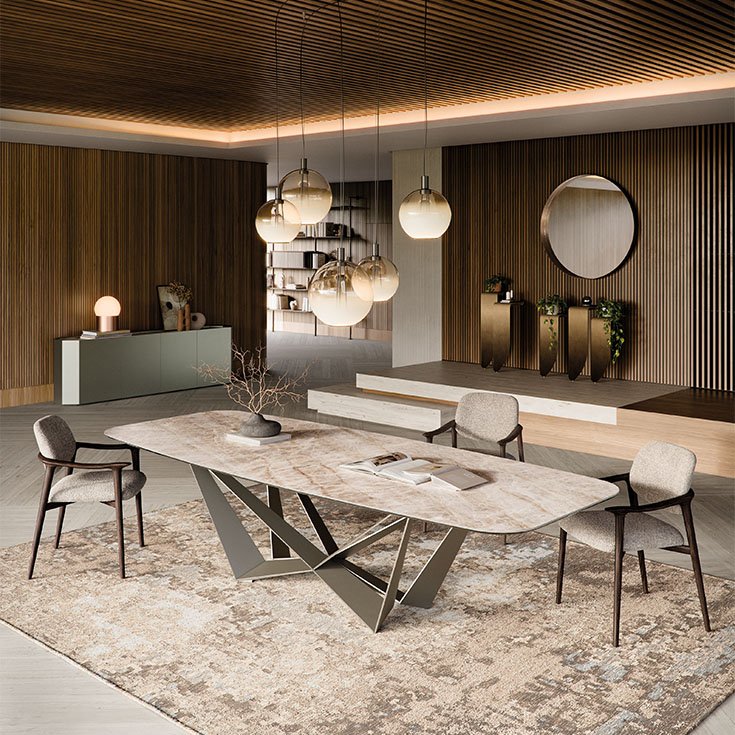
Search for a dining table and you find hundreds of options at every size. This guide narrows it to ten luxury Italian dining tables, including extending designs, from brands that Faura represents. The designer, materials, sizes and finishes come from each maker's own website, and we give no prices. Faura is a private showroom and residency in Westminster that works with independent interior designers, so we see these tables specified from the trade side.
TL;DR:
- Ten Italian dining tables from Cattelan Italia, Bonaldo, Porada, Gallotti&Radice and Cassina, all brands Faura represents.
- Two extendable dining tables: Cattelan Italia's Eliot Keramik Drive and Bonaldo's Big Table.
- Top materials include ceramic, marble, wood and glass. Match the material to how the room is used.
- Every fact comes from the maker's own page, which we link. We give no prices and no rankings.
- Faura is trade-only: see and compare these tables by appointment, through one trade account.
Contents
- Eliot Keramik Drive by Cattelan Italia
- Skorpio Keramik by Cattelan Italia
- Napoleon Keramik by Cattelan Italia
- Big Table by Bonaldo
- Padiglioni by Bonaldo
- Infinity by Porada
- Oswood by Porada
- Sansiro by Porada
- Adam by Gallotti&Radice
- LC6 by Cassina
- How to choose
- Specify them through Faura
- Questions people ask
1. Eliot Keramik Drive by Cattelan Italia
Eliot Keramik Drive is the extending version of Cattelan Italia's ceramic-top Eliot table, listed with the year 2015. The base is embossed lacquered steel in titanium, bronze, graphite or black, and the top and the extension leaves are Marmi ceramic in a long list of marble-effect finishes. Cattelan gives the sizes as 160 closed and 236 open, up to 200 closed and 294 open, with depths of 90 to 106 cm, with seating figures listed for each size. Because the leaves match the top, an extending table does not look like a compromise when closed. It is the right choice for a London flat or house where the table lives against a wall most days and opens up for a dinner party.
See Cattelan Italia at Faura | Cattelan Italia tables
2. Skorpio Keramik by Cattelan Italia
Cattelan Italia says the Skorpio launched a new concept of design dining table and became an icon of the modern living room. The Keramik version, listed with the year 2015, has a ceramic top on an embossed lacquered steel base in titanium, bronze, graphite, pearl or black, or brushed bronze or grey. The family also includes glass, wood, marble and CrystalArt tops, a Keramik Premium with a thick hand-brushed edge, and round versions. In practice the geometric base gives you a table that looks sculptural from a distance, while the ceramic top is easy to live with. It suits an open-plan room where the table is seen from the kitchen and the sofa.
See Cattelan Italia at Faura | Cattelan Italia tables
3. Napoleon Keramik by Cattelan Italia
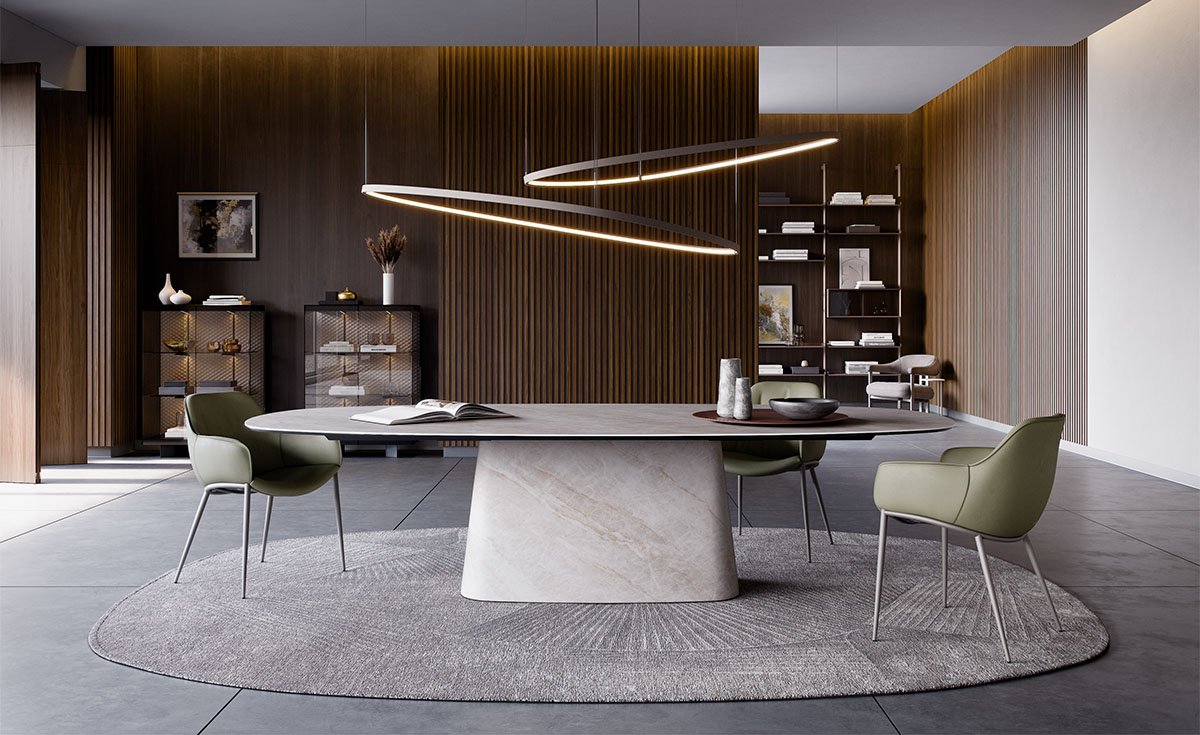
Napoleon is Cattelan Italia's newest table family here, listed with the year 2024. The central base is made with a ceramic modelling technique that produces curved slabs for the first time in the Keramik collection, with rounded edges. The base is joined by two symmetrical hubs, and a recessed vertical groove in the ceramic breaks up the short side of the plinth. The Keramik version has base and top in ceramic, Keramik Premium adds a broad hand-brushed edge, and Napoleon Wood has a ceramic base with a wooden top. A solid central base means the table has no legs in the way, so it is worth considering where you want guests to sit at the ends. It suits a room where the table is the main sculptural object.
See Cattelan Italia at Faura | Cattelan Italia tables
4. Big Table by Bonaldo
Bonaldo says Big Table, designed by Alain Gilles, is built on legs in laser-cut steel of different sizes and geometric shapes, painted in many colour combinations. The top is fixed or extending and comes in veneered or solid wood, ceramic or marble, and there is also a version in hand-spatulated clay. Bonaldo notes that a special edition in Saint Denis marble marked ten years since the launch, in 2019. For anyone searching for an extendable dining table, this is the one to ask about: the extending top is part of the range rather than an add-on. The leg shapes give the table a graphic base, so it suits modern rooms where a plain four-leg table would look anonymous.
See Bonaldo at Faura | Bonaldo product page
5. Padiglioni by Bonaldo
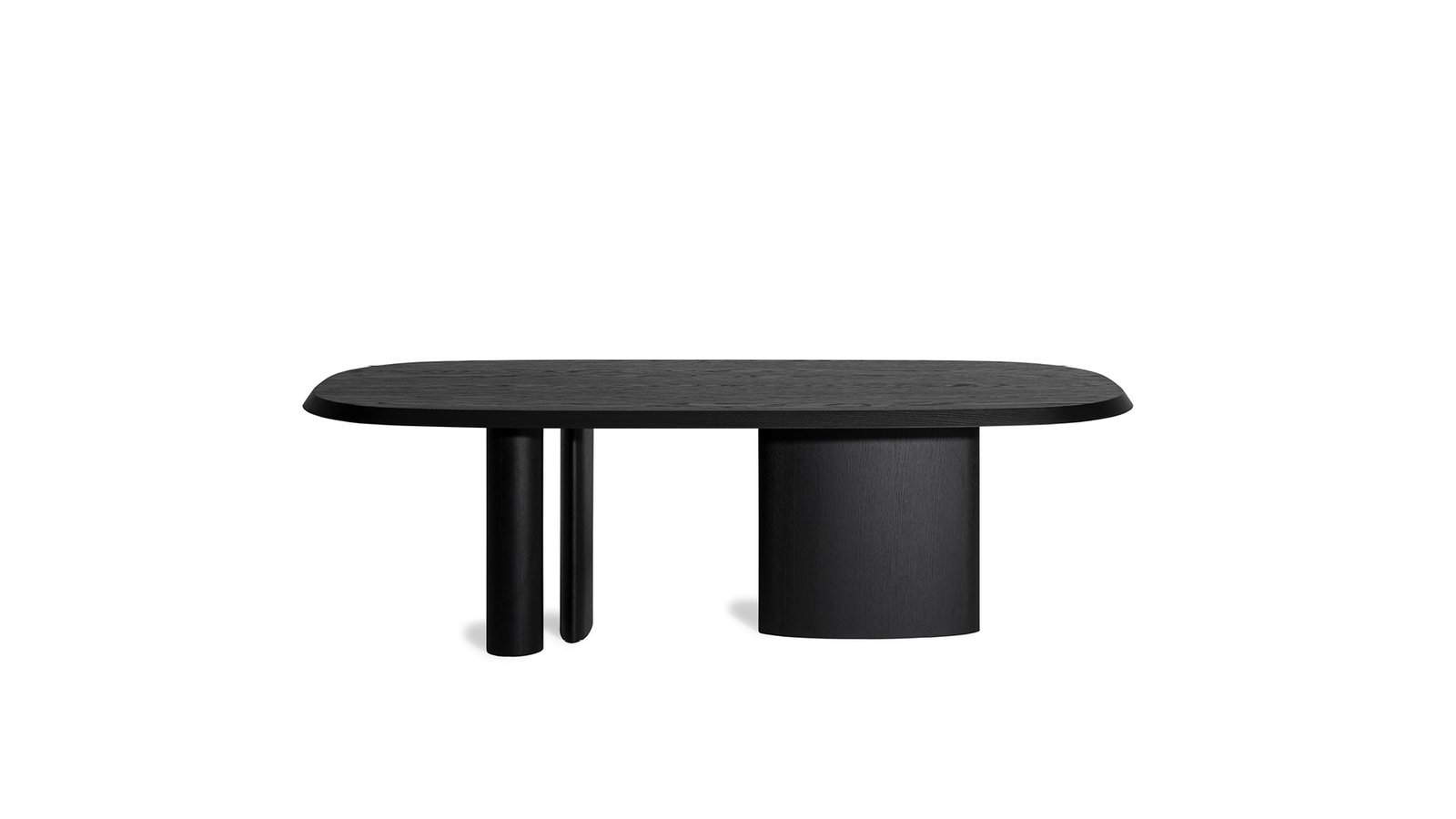
Alain Gilles drew Padiglioni as a miniature of an architectural pavilion, taking his inspiration from Mies van der Rohe's Barcelona Pavilion. The base has three asymmetrical elements, each a different shape, placed apparently at random, so the table changes appearance as you walk around it. This table asks for a room where it can be seen from several sides, such as a dining area in an open plan space, not one pushed against a wall.
See Bonaldo at Faura | Bonaldo product page
6. Infinity by Porada
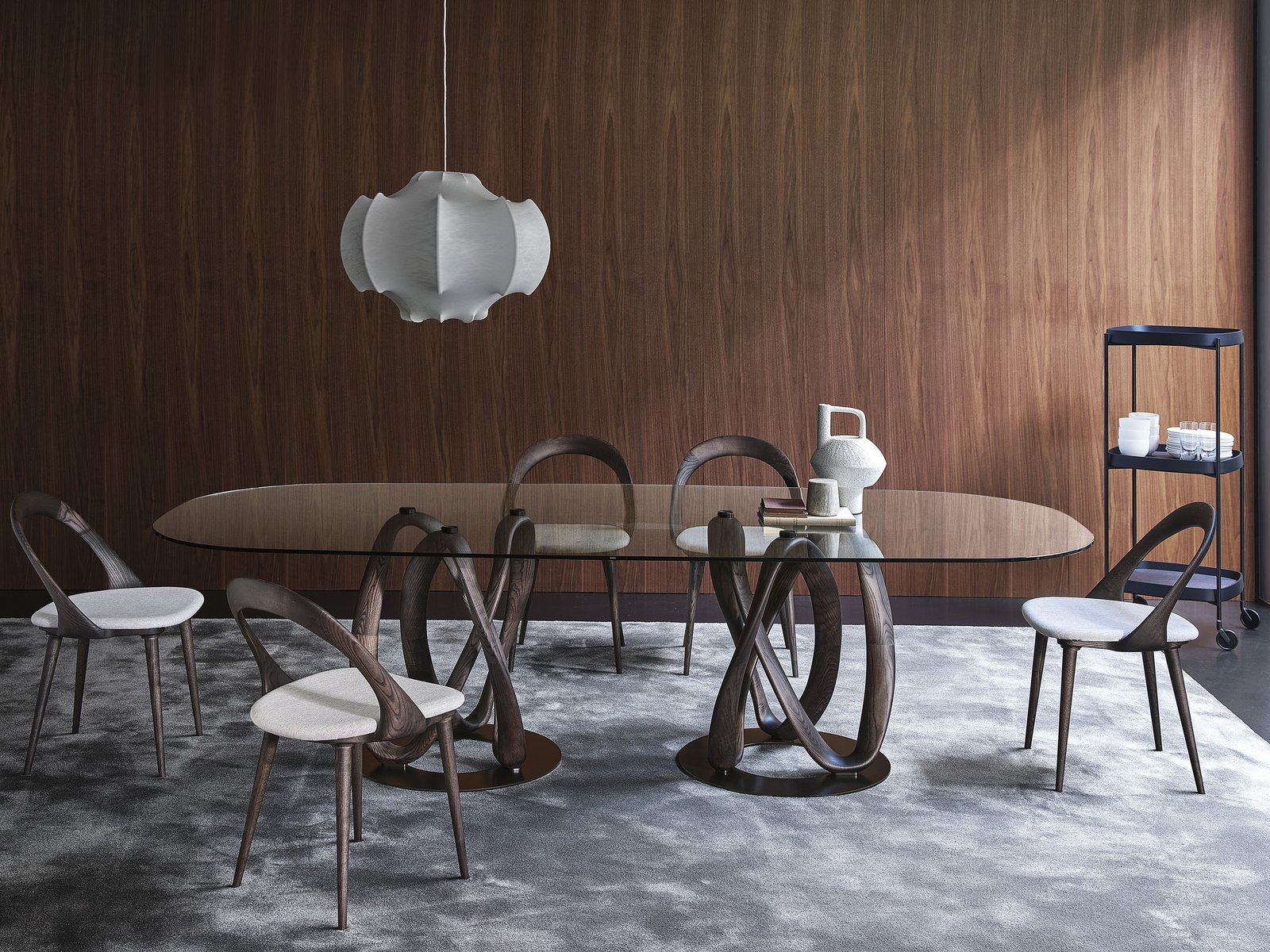
Stefano Bigi designed Infinity for Porada. Porada says it began as a round dining table with a crystal top, and it is now offered with a ceramic or solid wood top in oval, rectangular or elliptic shapes. The sculptural base is solid ash or walnut, sitting on a metal ring in chromed, black chromed or grey pewter, with one central base or two bases for large rectangular and oval tables. The two-base option is useful for long tables that seat many people, since a single base would limit legroom at the ends. It suits a traditional or contemporary dining room equally, because the wood and the metal ring can be matched to the rest of the interior.
See Porada at Faura | Porada product page
7. Oswood by Porada
Oswood grew out of Porada's Osmose collection and reverses the roles of its two materials. The legs are solid Canaletta walnut and the top is marble. The legs run past the thickness of the marble top, so the grain of the walnut is visible at the edge. Patrick Jouin designed it. Porada notes that he also designed the Ella and Louis chairs, so a matching dining set is possible within one collection. Marble needs care with acids and heat, so ask for a sample and test it with your client's habits in mind. It suits a formal dining room where the table is expected to last and the walnut and stone are the whole decoration.
See Porada at Faura | Porada product page
8. Sansiro by Porada
Studio Meneghello Paolelli designed Sansiro for Porada. The frame is solid Canaletta walnut, and the top is rectangular, round or oval in wood, marble or ceramic. The legs are the feature: Porada describes a rhythmic succession of solid and void rings that run to the tabletop, giving the table a three-dimensional pattern and a sense of suspension. That range of top shapes and materials makes it a flexible choice for a project where the dining room shape is awkward, because a round or oval top avoids sharp corners. Ceramic is the practical choice for a family kitchen table, while marble suits a more formal room.
See Porada at Faura | Porada product page
9. Adam by Gallotti&Radice
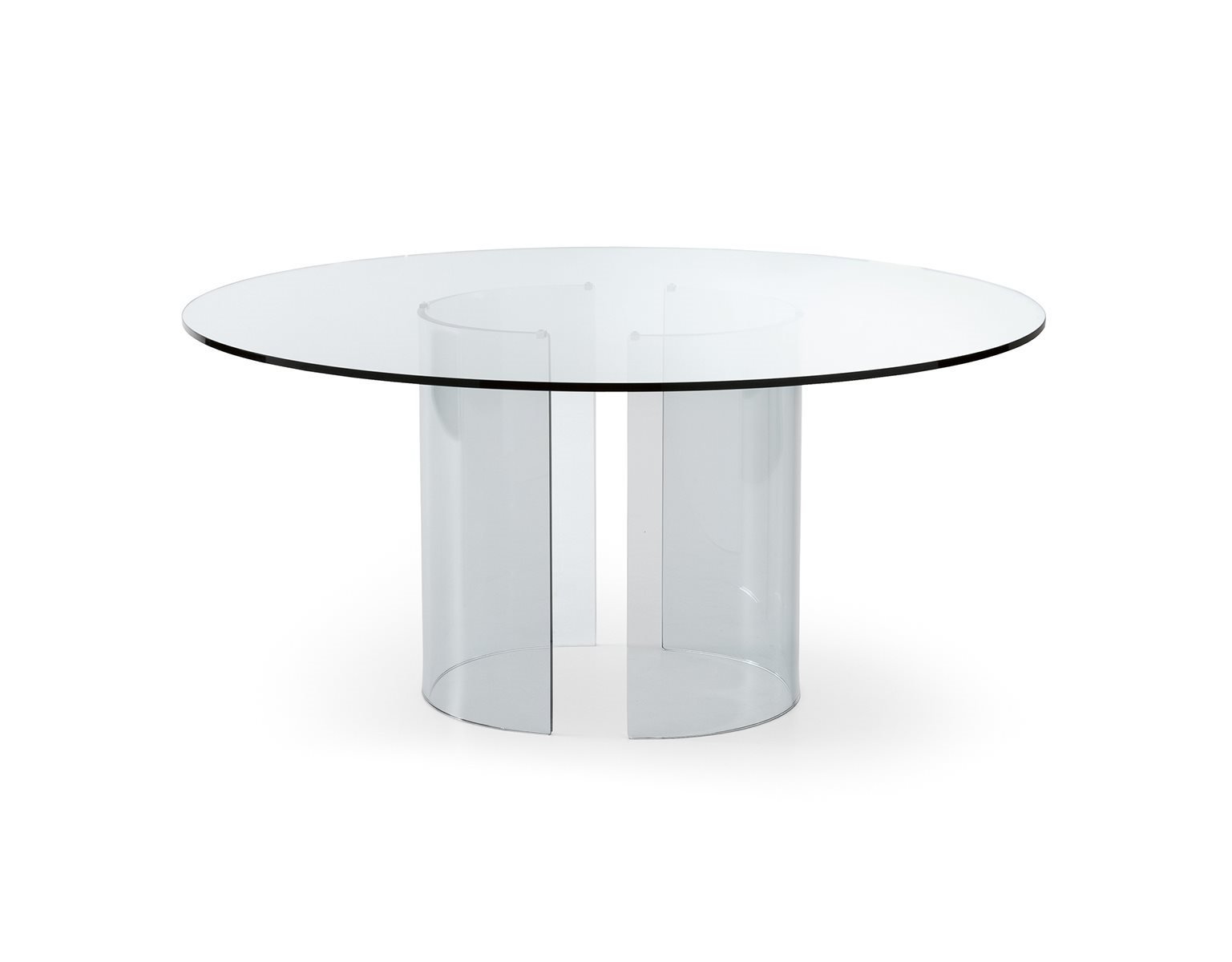
Adam is a glass table. The top is 15 mm clear glass and the bases are 15 mm glass, bent by fire and ground by hand, with chromed metal parts. Gallotti&Radice also offers it without the metal parts, at a finished height of 72 cm, and makes special tops to order, with four bases for tops over 260 cm. Glass makes a heavy dining table feel lighter, which matters in a small London dining room or a room with beautiful flooring or rugs you want to see. It does show fingerprints, so it is better for a formal dining room than for a family table used daily.
See Gallotti&Radice at Faura | Gallotti&Radice product page (Italian)
10. LC6 by Cassina
Cassina's LC6 is the table of the Le Corbusier, Pierre Jeanneret and Charlotte Perriand collaboration, introduced in 1929 at the Salon d'Automne. Cassina says its idea lies in separating the supporting piece from the supported one, the base from the top. The base was drawn in 1928 from the oval profiles used to separate the wings of biplanes. Today it is a steel base painted in the Le Corbusier colour palette, with a top in clear glass, textured glass, Bianco Carrara marble or Nero Marquinia marble. It is the oldest design in this guide, which makes it an easy reference when you present a scheme to a client.
See Cassina at Faura | Cassina product page
How to choose
Work out the number of people first. Allow roughly 60 cm of table edge per person, and at least 90 cm of clear floor behind each chair to pull out and move around. Measure the room, not just the table.
Decide whether you need an extendable dining table. An extending table lets a small room seat eight on occasion. Ask how the mechanism works, where the leaves are stored, and whether the leaves match the top. Cattelan's Eliot Drive and Bonaldo's Big Table are the extending designs here.
Choose the top for use, not for the sample. Ceramic is hard to mark. Glass shows fingerprints. Marble can stain from acids and needs sealing and care. Wood can be refinished. Ask for the actual finish sample and look at it in the room's light.
Check the base against the chairs. A central base or two-base design leaves legroom clear but limits where armchairs can sit at the ends. A four-leg table is simpler.
Allow for delivery. Plan lift sizes, stairs and parking early.
Specify them through Faura
Faura is a private, trade-only showroom and residency for interior designers in Westminster, London SW1. Every product above comes from a brand we represent, so you can see and compare them in one place, by appointment, instead of visiting several showrooms. Book an appointment to look at finishes, fabrics and samples with your client.
- One trade account. Open it through our trade page. Several brands, one order, one invoice, one point of contact.
- One delivery plan. We coordinate lead times and deliveries to site, so pieces from different makers do not arrive in a muddle.
- Installers and a designer if needed. Faura introduces fitters and other trades from our network, and can introduce an independent interior designer. See interior designers in London.
Faura does not install and does not set prices in a journal article. Your quote is built from the trade pricing for the exact model, size and finish you choose.
Questions people ask
What is the best extendable dining table?
There is no single best. From this guide, Cattelan Italia's Eliot Keramik Drive and Bonaldo's Big Table both offer an extending top. Choose by size when closed, how many guests you seat when open, and the material of the top.
How many people does an extendable dining table seat?
It depends on the size. Cattelan Italia's page for Eliot Keramik Drive gives sizes from 160 to 236 cm up to 200 to 294 cm, and lists seating figures for each size.
What are luxury dining tables made from?
The tables in this guide use ceramic, marble, solid Canaletta walnut, ash, glass and painted steel. Each maker lists the materials and finishes on its product page.
Are Italian dining tables made to order?
Many are made in a chosen top, base and finish, so lead times vary. Ask the maker, through Faura, for the lead time on your configuration.
Is ceramic or marble better for a dining table?
Ceramic is harder to mark and is easier to live with every day. Marble has a natural pattern but needs care with acids and heat. Ask for samples of both.
Can I buy these tables directly?
Faura is a trade-only showroom. Orders go through a trade account for interior designers and architects. Open one on our trade page and book a visit to see the pieces.