How much does a new kitchen cost in London? A practical guide
Labour is about 20–30% of a fitted kitchen’s cost, says Which?. What else drives a London kitchen budget, what to line-item and how to compare three quotes.
Faura · · 7 min read
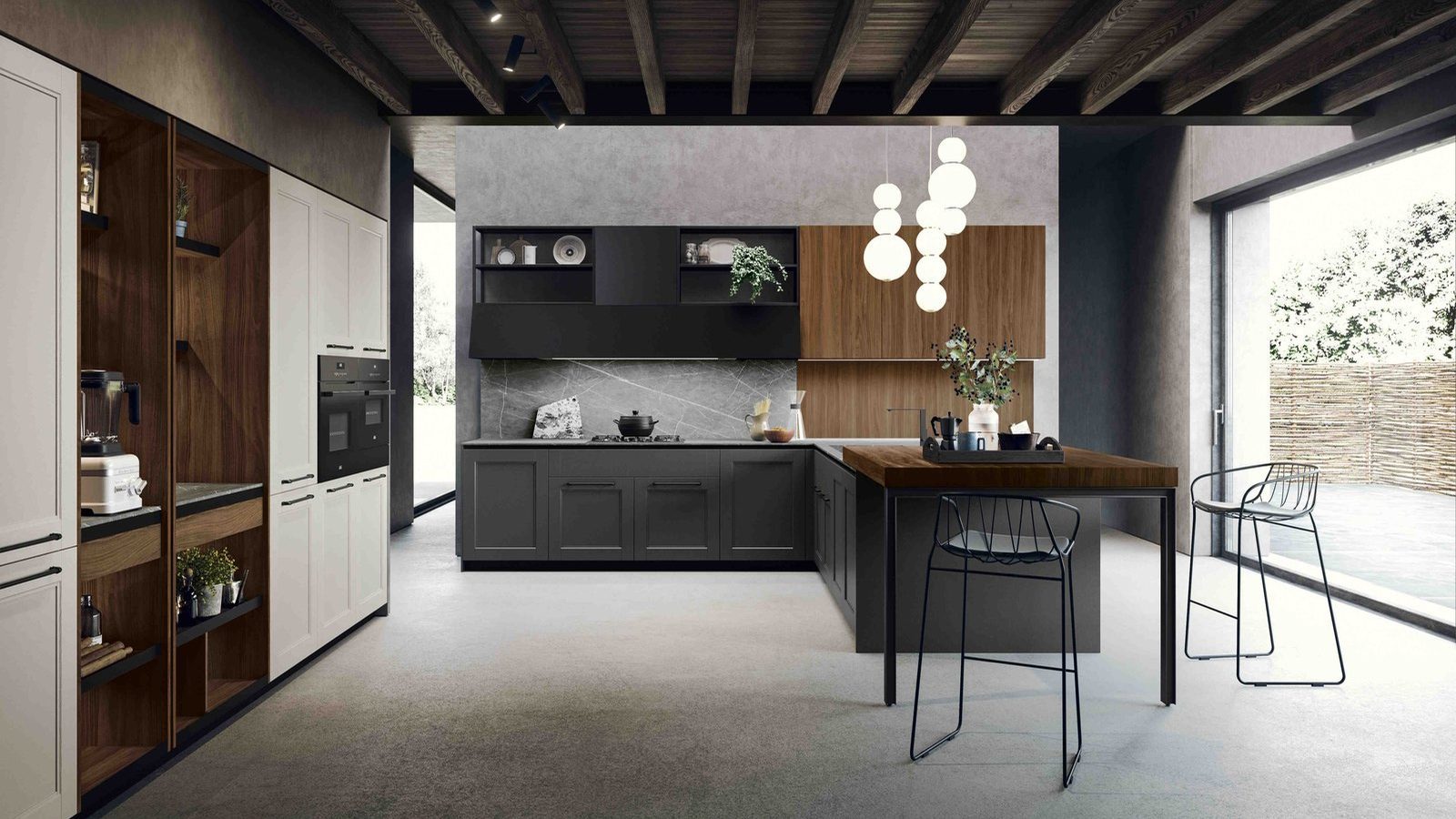
“How much does a new kitchen cost?” is the first question every London homeowner asks, and nobody can answer it honestly in a single number. A kitchen is a bundle of separate costs: cabinets or joinery, worktops, appliances, plumbing, electrics, flooring, labour, waste removal and VAT. Each moves with your choices and with the state of the room you start from. This guide explains how the cost is built, what the published sources say, and how to set a budget you can defend. Faura is a private showroom and residency in Westminster that works with independent interior designers, so we see these budgets from the specification side.
TL;DR:
- Which? works with the Building Cost Information Service (BCIS) on kitchen costs and publishes separate figures for standard and bespoke kitchens, by house size. The tables are for members only, so we do not reproduce them.
- Which? reports that labour is about 20–30% of the final spend when you do none of the installation yourself.
- Layout changes, appliances, worktops and joinery drive the total. Moving plumbing, gas or electrics costs more than swapping like for like.
- Budget for VAT (standard rate 20%), waste removal, making good and a contingency, not just the cabinets.
- Get itemised quotes. A single “kitchen price” that hides what is included cannot be compared with another.
Contents
- What the published sources say
- What drives the cost of a kitchen
- Where the money goes
- Why London projects need more care
- How to set a budget and keep to it
- Comparing quotes properly
- How Faura works with you
- Questions people ask
What the published sources say
We checked the main UK consumer sources before writing this. In its guide “How much does a new kitchen cost in 2026?” (27 April 2026), Which? says it consults BCIS every year on renovation prices and gives separate figures for a standard and a bespoke kitchen in a terraced house (8 square metres), a semi-detached house (15 square metres) and a detached house (24 square metres). The figures cover removing the old kitchen, supplying and fitting units, flooring, wall tiling and decoration, and include VAT. Only Which? members can see the tables, so we do not quote them; read the source for the numbers.
What Which? publishes openly is useful for planning. Labour makes up roughly 20–30% of the final spend if you do none of the installation yourself, and tends to be higher for bespoke kitchens because they need more precision. Magnet Kitchens told Which? to expect around 30% of a budget to go on plumbing, flooring, electrics and other expenses, and that a kitchen renovation should on average cost 5–10% of the value of the home. Treat that last figure as one retailer’s rule of thumb, not a standard.
We have not found a free, named source with a reliable London-specific kitchen price, so we do not give one. Anyone quoting a single London average without naming its source is guessing.
What drives the cost of a kitchen
Layout changes
Keeping the sink, hob and appliances where they are is the biggest saving available. Moving a sink means new waste and supply pipework. Moving a hob can mean a new gas or electrical supply and a new extraction route. Opening up a wall or adding a steel brings structural work and building control, and in a terrace or flat can raise party wall matters.
Cabinets and joinery
Flat-pack, factory-built, made-to-measure and fully bespoke joinery sit at very different price points. In older London houses walls and floors are rarely square, so fitted joinery scribed to the room often performs better than standard units, and costs more. Which? says it has no data on bespoke cabinetry because prices vary too much to summarise.
Worktops
Laminate, quartz, solid surface, natural stone and sintered stone are priced very differently, and fabrication adds to the material price: cut-outs for sinks and hobs, polished edges, upstands and templating. See our page on Dekton worktops for one sintered option.
Appliances
Appliances are often the largest single swing. A basic oven and hob and a full suite with steam oven, integrated coffee machine, wine cabinet and downdraft extraction are very different budgets. Check dimensions and installation requirements early, because they determine the cabinetry. Faura’s Miele page shows one range available on a trade account.
Plumbing, electrics and gas
Which? advises that gas work must be done by a Gas Safe-registered engineer and electrical work by a qualified electrician. A new kitchen often needs new circuits for an induction hob or oven, a real cost that does not appear in a cabinet quotation.
Taps and sinks
Specialist taps, boiling-water taps and undermount sinks look like small lines on a quote but add up. Compare them item by item. Gessi is one example of a specialist tap and fittings range.
Where the money goes
Which? lists the main elements of a kitchen budget as labour, cabinets, appliances, island, worktop, splashback and flooring, and says that for a semi-detached kitchen the proportions are broadly similar whatever the total. Its list is not exhaustive and leaves out plumbing, electrical and insulation costs. Add these lines to any budget you build yourself:
- Design and specification, through a retailer, a kitchen designer or an interior designer.
- Strip-out, skip hire and waste disposal.
- Making good: plastering, decorating, flooring, tiling.
- Plumbing, electrics, lighting and ventilation.
- Delivery and storage. Kitchens often arrive before the room is ready, so someone has to receive and store them.
- VAT. GOV.UK gives the standard rate as 20% for most goods and services. Check whether a quote includes it.
- Contingency for what is found behind the old units. Ask your designer or contractor what reserve they recommend for a property of your age.
Why London projects need more care
We do not state a London premium, because we have no sourced figure, but the practical differences are clear. Many London kitchens are in flats where the managing agent or freeholder must approve works and may restrict working hours or require a licence for alterations. Lift size and parking controls affect deliveries. Period properties may fall under listed building or conservation area rules. Each adds time, coordination and sometimes cost, and none of it shows up in a standard price table.
How to set a budget and keep to it
- Decide the scope first. Replacing like for like, reconfiguring the layout and extending are three different projects.
- Fix the appliance list early. It drives cabinet design, power and ventilation.
- Choose the worktop material before the cabinets are ordered. Templating usually happens after the units are fitted, so the material needs to be settled.
- Set a total, then allocate it across cabinetry, worktop, appliances, labour and a reserve, so one choice does not eat the rest.
- Price the whole job, not the cabinets. Comparing one firm’s cabinet price with another’s all-in price is the most common mistake.
Comparing quotes properly
Which? advises getting at least three quotes when you are not buying and fitting from the same company, and asking traders to break them down. For a kitchen, ask each firm to state what is included for cabinets, worktop, appliances, plumbing, electrics, making good, waste removal, delivery and VAT, who is responsible for each stage and who is subcontracted. If one quote is much lower, find the line it has left out before you call it a bargain.
How Faura works with you
Faura is a private, trade-only showroom and residency for interior designers in Westminster, London SW1. We do not set a kitchen price here, and we do not install. We make the project run as one piece of work:
- Introduction to a designer. We introduce you to an independent interior designer suited to your project, or work with your own designer. You remain your designer’s client.
- Specification at the Residency. You and your designer look at finished rooms, appliances, worktop samples and finishes together, by appointment. See our kitchen showroom.
- One order. Everything is ordered through one trade account: one order, one invoice, one point of contact, with Faura’s trade pricing shared in your quote.
- Delivery. We coordinate lead times and deliveries to site.
- Installation through our contractor network. We introduce kitchen fitters, joiners and other trades from our network and coordinate them. Faura does not install itself.
Start with interior designers in London, or book an appointment. If you are weighing bathrooms as well, read our guide to what a new bathroom costs in London. For fees and choosing a designer, see how much an interior designer costs and how to choose an interior designer.
Questions people ask
How much does a new kitchen cost in London?
There is no single honest figure. Which? publishes BCIS-based cost tables for standard and bespoke kitchens by house size, but only for members. Your total depends on layout changes, cabinetry, worktop, appliances, labour and VAT, and flats add access and approval costs.
What percentage of a kitchen budget is labour?
Which? reports that labour is about 20–30% of the final spend if you do none of the installation yourself, and higher for bespoke kitchens.
Does the quote include VAT?
Not always, so ask. GOV.UK gives the standard rate of VAT as 20% for most goods and services, a large addition to a quote that leaves it out.
Is it cheaper to keep the same kitchen layout?
Usually, yes. Keeping sink, hob and appliances in place avoids new pipework, gas and electrical routes, and often structural work.
Do I need an interior designer for a kitchen?
You do not need one, but a designer coordinates layout, appliances, joinery, lighting and trades so the pieces fit. Faura can introduce one, or work with yours.
Who does the installation if I buy through Faura?
Faura does not install. We introduce fitters, joiners and other trades from our contractor network and coordinate them with the order and delivery.
How many quotes should I get?
Which? recommends at least three where you are not buying and fitting from the same firm, each broken down line by line so they can be compared.