Little Greene Basalt (221): blue-black shades, pairings and finishes
Basalt (221) is Little Greene’s blue-black: near-black in low light, blue in daylight. Its pairings, the 12 finishes it comes in and how to test it.
Faura · · 5 min read
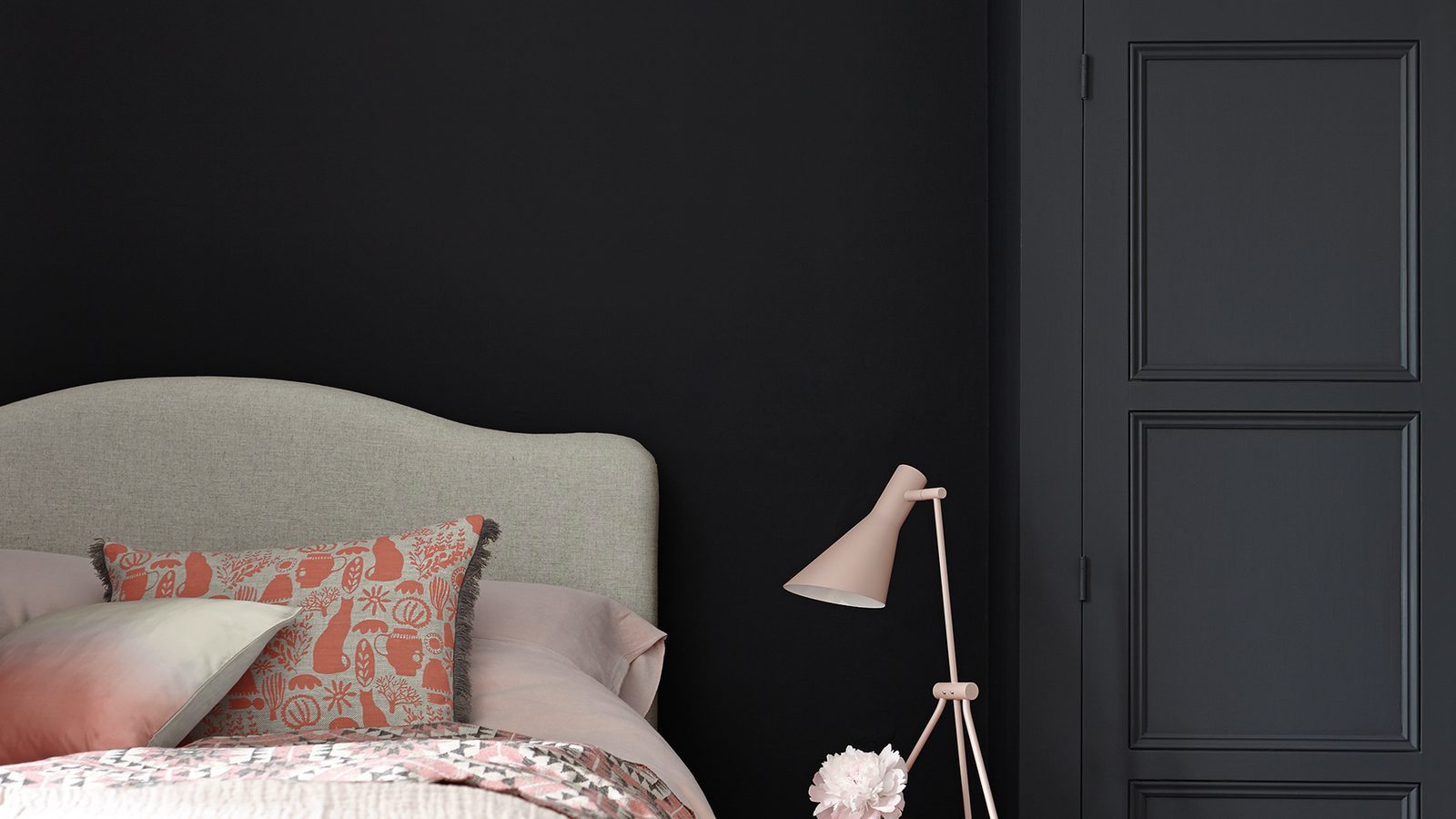
Basalt (221) is Little Greene’s blue-black: a deep colour that reads as black in low light and turns blue in daylight. Little Greene files it under strong blues and blue-based blacks, so it suits rooms where a true black would feel hard. Faura supplies it on a Little Greene trade account, with a designer and a decorator if the project needs them.
TL;DR:
- Little Greene lists Basalt as colour 221, a blue-black in its strong blues and blue-based blacks and in the Deep Paint Colours group. It appears on both the Colours of England and Colour Scales cards.
- Little Greene promotes it for front doors, where daylight brings out the blue, and says it reads as black in low light.
- Suggested pairings: French Grey - Pale and Slaked Lime - Mid as whites, French Grey and Inox as neutrals, Juniper Ash as a coordinating colour, Orange Aurora as the accent and Jack Black as the related dark.
- It is listed in every main finish except Distemper and Limewash, so it covers walls, joinery, floors and exterior doors.
- Test it as a painted sample, in the room and in its own light, before you commit.
Contents
- What colour is Basalt?
- Colours that go with Basalt
- Which finish to use where
- How to test it
- Specifying Basalt through Faura
- Questions people ask
What colour is Basalt?
Basalt is a deep, dark blue. Little Greene files it under Strong Blues and Blue-based Blacks, and its site labels the colour Blue Black. It also sits in the Deep Paint Colours group and the Grey collection, as well as on the Colours of England and Colour Scales cards.
Little Greene gives no historical origin for Basalt. It does say that the colour reads as black in low light and that daylight brings out the blue, which is why it recommends it for front doors. The colour page itself mentions blue undertones.
In practice Basalt is softer than a pure black: almost black in the evening and distinctly blue at midday.
Colours that go with Basalt
Little Greene publishes suggested combinations for every colour. For Basalt they are:
- Related whites: French Grey - Pale (161) and Slaked Lime - Mid (149).
- Related neutrals: French Grey (113) and Inox.
- Coordinating colours: Grey Stone and Juniper Ash (115).
- Contrasting accent: Orange Aurora.
- Related dark: Jack Black (119).
Its scheme photographs also show Basalt with Orange Aurora and Bassoon, and Little Greene suggests the wallpapers Millefleur - Knight, Bayham Abbey - Celestial and Monroe - Night Flower alongside it.
Which finish to use where
Little Greene lists Basalt in twelve finishes. Its guidance on where each one belongs:
- Absolute Matt Emulsion: walls, ceilings and plasterwork in quiet rooms such as bedrooms, living rooms, dining rooms and studies. It is Little Greene’s most popular paint, and the finish the cards and sample pots are made in.
- Intelligent Matt Emulsion: walls and ceilings in busier areas such as kitchens, utility rooms, hallways and children’s rooms. Low sheen (about 2%), washable and self-priming.
- Intelligent Eggshell: interior woodwork, radiators, and walls that must be scrubbable, such as kitchens and bathrooms. Sheen is 10–15%, and it resists moisture and wear.
- Intelligent Satin: all interior woodwork and joinery, kitchen cabinets and wooden furniture. At 30–35% sheen, it is the one Little Greene recommends for kitchen cabinets.
- Intelligent Floor Paint: wood or concrete floors, at 30–40% sheen.
- Intelligent Gloss: a high-sheen finish (87–90%) for woodwork and front doors.
- Traditional Oil Gloss: an oil-based gloss for primed interior and exterior woodwork, metal and front doors.
- Interior Oil Eggshell: an oil-based eggshell for interior woodwork, primed metals and kitchen cabinets, at 10–20% sheen. Little Greene says it may yellow over time without UV light.
- Intelligent ASP (All Surface Primer): a primer and undercoat in one, tinted to a slightly lighter version of the colour.
- Intelligent Exterior Eggshell: exterior window frames, doors and gates, at 15% sheen.
- Intelligent Masonry Paint: exterior walls (brickwork, new render and existing paint) at 5% sheen.
- Tom’s Oil Eggshell: an oil-based exterior finish for garden furniture, gates and doors.
Little Greene’s page does not list Distemper or Limewash for Basalt, so lime plaster or old masonry needs another colour. On a front door, compare Intelligent Gloss, Traditional Oil Gloss and Intelligent Exterior Eggshell: a dark colour shows the sheen difference clearly, so look at samples side by side.
How to test it
- Order a sample pot. Little Greene sample pots are 60 ml and come in Absolute Matt Emulsion.
- Paint two coats on an A4 sheet of card rather than the wall, so the sample can move.
- Look at it on each wall of the room in the morning, at midday and under the evening lighting.
- Hold it against the fixed items in the room: the floor, the stone, the kitchen fronts and the main fabric.
- Basalt changes a lot between daylight and lamplight, so check the sample again after dark. If the door or wall will be seen from outside, look at it from the street too.
Specifying Basalt through Faura
Faura holds a Little Greene trade account at the Faura Interior Design Residency in Westminster. The full range, finishes and wallpapers are on our Little Greene page. What that means for you depends on who you are.
- Interior designers and architects: compare the Little Greene colour cards with the stone, timber and fabrics of your scheme at the Residency, then put paint and wallpaper on the same order as everything else. Open a trade account.
- Decorators and contractors: order Little Greene for a job through Faura, and bring your client to the Residency to settle colours, finishes and the rest of the fit-out in one visit. Book a visit.
- Homeowners: we can introduce an interior designer and a decorator from our contractor network, buy everything the scheme needs and coordinate delivery to site. One team looks after the project from the first colour choice to installation. Tell us about your project.
Questions people ask
Is Basalt black or blue?
It is a blue-black. Little Greene files it under Strong Blues and Blue-based Blacks, and says it reads as black in low light, with the blue coming through in daylight.
What goes with Basalt?
Little Greene suggests French Grey - Pale (161) or Slaked Lime - Mid (149) as whites, French Grey (113) and Inox as neutrals, Grey Stone and Juniper Ash (115) as coordinating colours, and Orange Aurora as a contrasting accent.
Is Basalt a good front door colour?
Little Greene promotes it for front doors, because daylight brings out the blue in it. It is listed in Intelligent Gloss, Traditional Oil Gloss and Intelligent Exterior Eggshell, among others.
What is the difference between Basalt and Lamp Black?
Both are filed under Blue-based Blacks. Basalt also sits in Strong Blues and is described as reading black in low light. Little Greene positions Lamp Black as a softer off-black than Jack Black. See our guide to Little Greene Lamp Black.
What is the LRV of Basalt?
Little Greene does not show a light reflectance value on its colour page. If your specification needs one, we request the technical data from Little Greene for you.
Is there a RAL code for Basalt?
No. Little Greene states that it cannot provide RAL or BS references for its colours. If a RAL item is already fixed on site, choose the nearest Little Greene shade by testing painted samples next to it.