Little Greene Bath Stone (64): a Victorian neutral, pairings and finishes
Bath Stone (64) is a warm, yellow-based neutral first used on the facades of Victorian town houses. It suits timber, brass and lime plaster, in 14 finishes.
Faura · · 5 min read
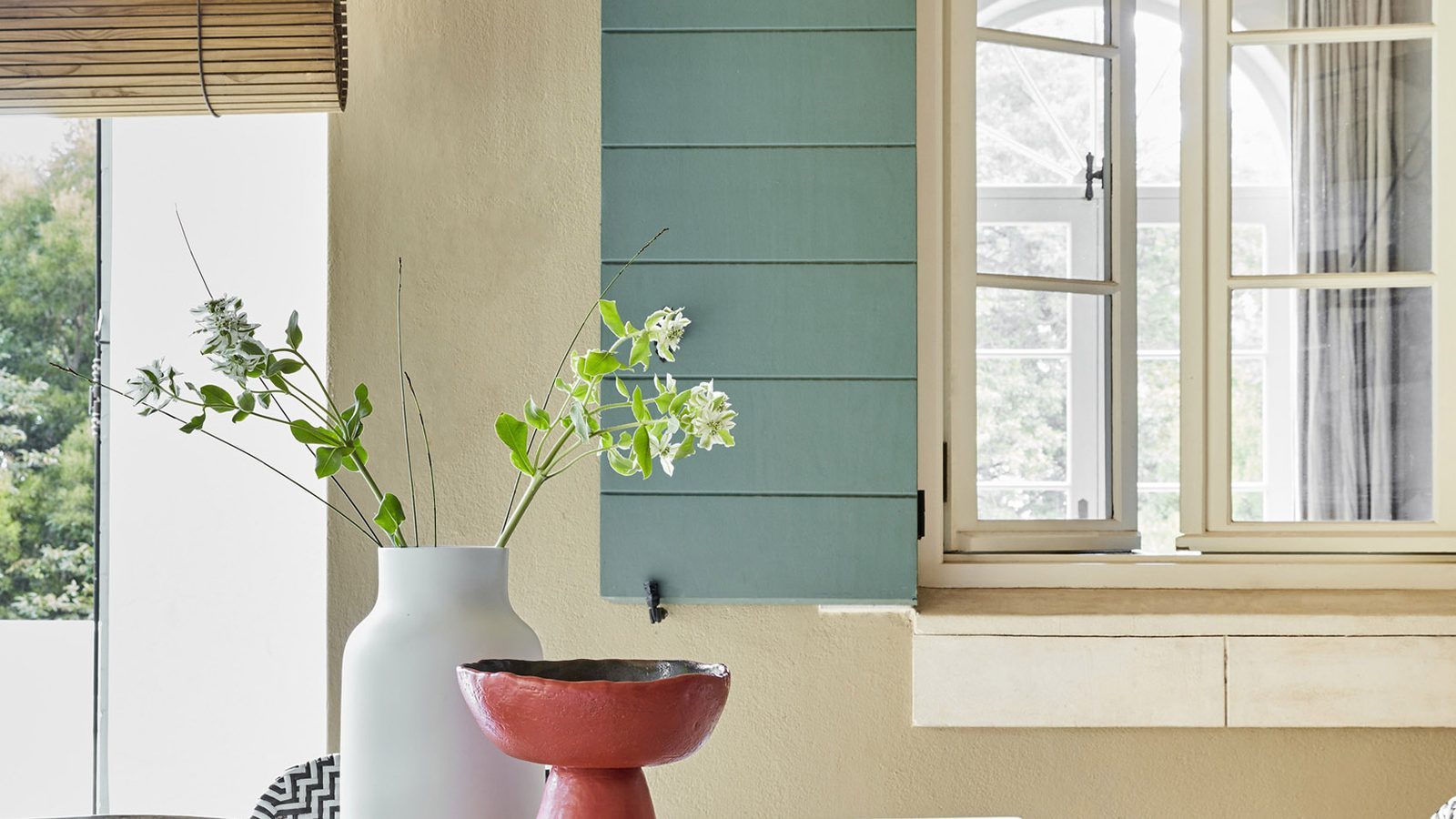
Bath Stone (64) is a yellow-based neutral from Little Greene’s Colours of England card, originally used to paint the facades of Victorian town houses. It is the colour of warm limestone, which is why it works with timber, brass and worn stone. Faura supplies it on a Little Greene trade account, with a designer and a decorator if the project needs them.
TL;DR:
- Little Greene lists Bath Stone as colour 64, under yellow-based neutrals. It is a Victorian colour in the Colours of England collection, with the site label Yellow Gold.
- It was originally used to paint the facades of Victorian town houses.
- Little Greene pairs it with Slaked Lime and Silent White – Mid as whites, Travertine – Light and Travertine – Mid as neutrals, Bassoon and Arras as coordinating colours, Olive Colour as the accent and Chocolate Colour as the dark.
- It comes in fourteen finishes, from Absolute Matt for walls to Distemper and Limewash.
- Test it as a painted sample in the room before you commit. Faura orders the sample pots and the paint with the rest of the scheme.
Contents
- What colour is Bath Stone?
- Colours that go with Bath Stone
- Which finish to use where
- How to test it
- Specifying Bath Stone through Faura
- Questions people ask
What colour is Bath Stone?
Little Greene files Bath Stone under Neutral > Yellow-based Neutral, in the Colours of England collection, and dates it to the Victorian period. Its origin note is short: the colour was first used on the facades of Victorian town houses.
The site label, Yellow Gold, is a fair description of a sample. It is a neutral with warmth in it rather than a grey, so it needs different company from the cool greys and stone-effect whites. It partners walnut, oak, brass and lime plaster well.
Bath Stone has no scale shades. Little Greene’s suggestions for lighter and darker company are below.
Colours that go with Bath Stone
Little Greene’s suggested combinations for Bath Stone:
- Related whites: Slaked Lime (105) and Silent White – Mid (330).
- Related neutrals: Travertine – Light and Travertine – Mid (273).
- Coordinating colours: Bassoon and Arras.
- Contrasting accent: Olive Colour (72).
- Related dark: Chocolate Colour.
Its scheme photographs show Bath Stone with Pleat and Linen Wash (33). Little Greene also suggests three wallpapers: Bonaparte in Red Gold, Lower George St. in Beryl and Richmond Green in Revival Blue.
Which finish to use where
Bath Stone is offered in fourteen finishes. Little Greene’s guidance on where each belongs:
- Absolute Matt Emulsion: walls, ceilings and plasterwork in quieter rooms such as bedrooms, living rooms, dining rooms and studies. Colour cards and sample pots are made in it.
- Intelligent Matt Emulsion: washable walls and ceilings in busier areas such as kitchens, utility rooms, hallways and children’s rooms. It can also go on woodwork and panelling.
- Intelligent Eggshell: skirting, doors, panelling, window trim and radiators, and walls that must be fully scrubbable, such as kitchens and bathrooms.
- Intelligent Satin: interior joinery, skirting, doors, windows, kitchen cabinets and wooden furniture.
- Intelligent Floor Paint: wood or concrete floors, and interior woodwork.
- Intelligent Gloss: a high-sheen water-based finish for woodwork and front doors.
- Traditional Oil Gloss: an oil-based high-sheen finish for primed interior and exterior woodwork and metal, and front doors.
- Interior Oil Eggshell: an oil-based finish for interior woodwork, primed metals and kitchen cabinets.
- Intelligent ASP (All Surface Primer): primer and undercoat in one for almost any surface, tinted to a slightly lighter version of the chosen colour.
- Intelligent Exterior Eggshell: exterior woodwork and joinery such as window frames, doors and gates.
- Intelligent Masonry Paint: exterior walls, including brickwork and new render.
- Tom’s Oil Eggshell: exterior wooden and metal garden furniture, gates and doors.
- Distemper: a breathable finish for walls and ceilings in older buildings, including interior lime plaster. It is not meant for high-traffic areas.
- Limewash: a breathable finish for old or damp exterior walls, porous stone and lime-rendered surfaces.
A yellow-based neutral can look more yellow in a high-sheen finish, so if walls and woodwork are both Bath Stone, look at a sample of each finish together.
How to test it
- Order a sample pot. Little Greene sample pots are 60 ml and come in Absolute Matt Emulsion.
- Paint two coats on an A4 sheet of card rather than the wall, so the sample can move.
- Look at it on each wall in the morning, at midday and under the evening lighting.
- Hold it against the fixed items in the room: the floor, the stone, the kitchen fronts and the main fabric.
- Look at it beside Slaked Lime (105), Little Greene’s suggested white, to judge whether the room wants Bath Stone’s warmth.
Specifying Bath Stone through Faura
Faura holds a Little Greene trade account at the Faura Interior Design Residency in Westminster. The full range, finishes and wallpapers are on our Little Greene page.
- Interior designers and architects: compare Little Greene colour cards with the stone, timber and fabrics of your scheme at the Residency, then put paint and wallpaper on the same order as everything else. Open a trade account.
- Decorators and contractors: order Little Greene for a job through Faura and bring your client to the Residency to settle colours, finishes and the rest of the fit-out in one visit. Book a visit.
- Homeowners: we can introduce an interior designer and a decorator from our contractor network, buy everything the scheme needs and coordinate delivery to site, from the first colour choice to installation. Tell us about your project.
Questions people ask
Is Bath Stone a yellow or a beige?
Little Greene files it as a yellow-based neutral, and its site label for the colour is Yellow Gold. In a room it reads as a warm stone colour, not a pale yellow.
What white goes with Bath Stone?
Little Greene suggests Slaked Lime (105) or Silent White – Mid (330) as related whites.
Can Bath Stone be used outside?
Little Greene lists Intelligent Masonry Paint, Intelligent Exterior Eggshell, Tom’s Oil Eggshell and Limewash among the finishes for this colour. That fits its origin on Victorian facades, but test it on the actual surface first.
What is the LRV of Bath Stone?
Little Greene does not show a light reflectance value on its colour page. If your specification needs one, we request the technical data from Little Greene for you.
Is there a RAL code for Bath Stone?
No. Little Greene states that it cannot provide RAL or BS references for its colours. If a RAL item is already fixed on site, choose the nearest Little Greene shade by testing painted samples next to it.
Where can I get Bath Stone in London?
Little Greene has its own showrooms in Marylebone, Chelsea, Notting Hill, Islington and Richmond. Trade professionals can also specify and order it through Faura in Westminster, with the other materials for the project. Visits are by appointment.